
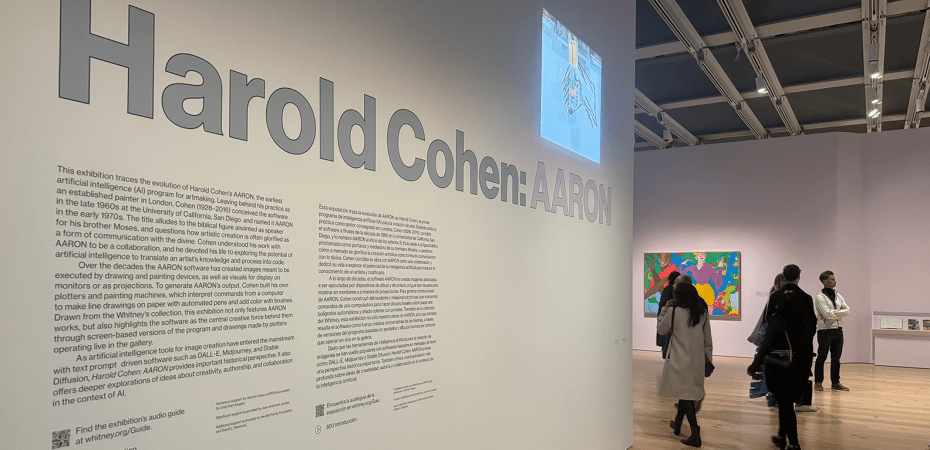
 Stepping into the world of Harold Cohen’s AARON at the latest exhibition is akin to traversing the annals of artificial intelligence’s artistic evolution. Held at the Whitney Museum of American Art, the exhibition delves into the genesis and progression of Cohen’s pioneering AI program, AARON, which stands as a testament to the fusion of creativity and technology.
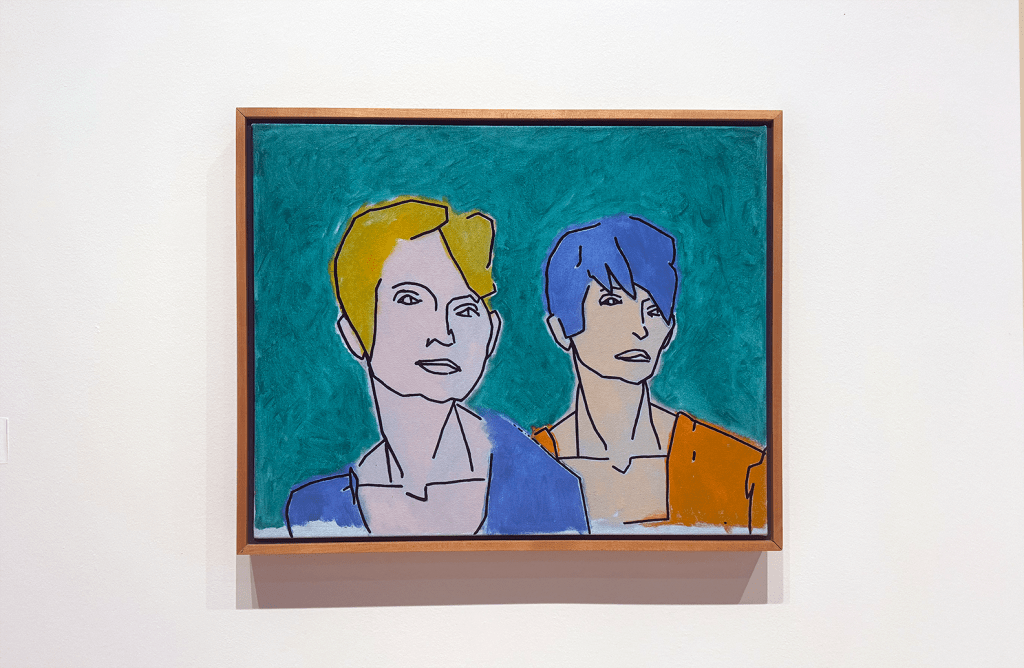
Cohen’s departure from the conventional realm of painting in London marked the inception of his visionary endeavor in the late 1960s. Inspired by the biblical resonance of the name “AARON,” Cohen embarked on a quest to challenge the conventional notions of artistic creation and divine communication. Through decades of relentless dedication, Cohen cultivated AARON as not just a tool but a collaborator, weaving together the intricacies of human artistry with the precision of code.
The exhibition meticulously traces AARON’s evolution, from its nascent stages at the University of California, San Diego, to its refinement at Stanford University’s Artificial Intelligence Lab. AARON, unlike contemporary AI counterparts, operates on a unique paradigm of symbol manipulation, combining formal rules with stochastic processes to craft compositions. Cohen’s ingenuity lies in embedding AARON with an understanding of the external world and the procedural nuances of artistic expression, akin to a painter’s cognitive processes.
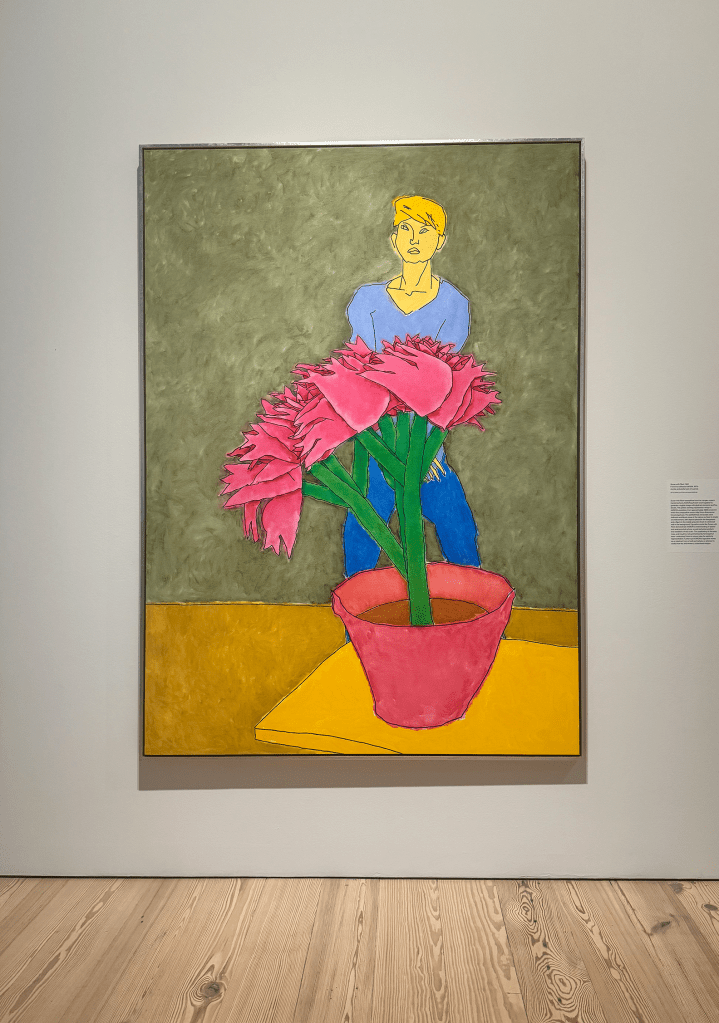
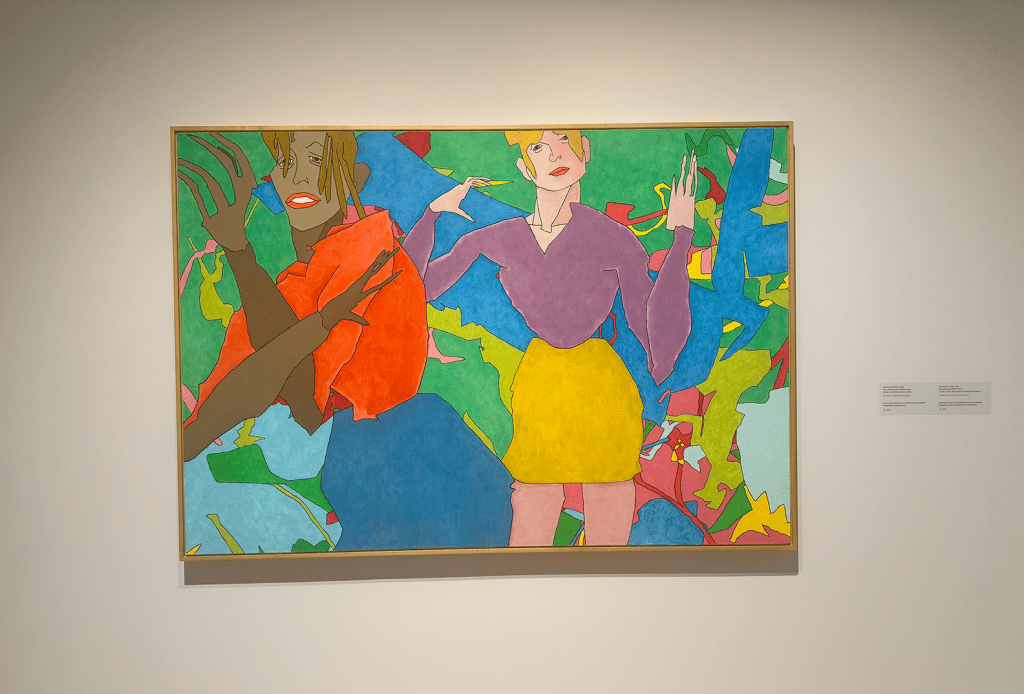
One captivating segment of the exhibition showcases AARON’s figurative phase, where human forms intertwine with elements of flora and fauna. Central to this phase is the AARON KCAT software, a culmination of Cohen’s collaboration with computer scientist Raymond Kurzweil. This phase not only highlights AARON’s departure from conventional AI methodologies but also underscores Cohen’s endeavor to democratize art through digital mediums.
As visitors traverse through AARON’s journey, from rudimentary shapes to intricate compositions reminiscent of Cézanne’s masterpieces, they confront profound questions about creativity, authorship, and collaboration in the realm of AI. Cohen’s transition from abstraction to figuration signifies not only a technical evolution but also a conceptual leap, as AARON’s understanding of the world becomes more concrete, mirroring the trajectory of human artistic development.
In an era where AI-driven artistry permeates mainstream discourse, Harold Cohen: AARON offers a poignant retrospective, illuminating the historical underpinnings and philosophical implications of AI in the creative sphere. Beyond being a mere showcase of technological prowess, the exhibition serves as a testament to Cohen’s enduring legacy—a testament to the symbiotic relationship between humanity and artificial intelligence in the pursuit of artistic expression.
This exhibition is organized by Christiane Paul, Curator of Digital Art, with David Lisbon, Curatorial Assistant.
On view
Whitney Museum of American Art
THROUGH MAY 19
Discover more from Art Sôlido
Subscribe to get the latest posts sent to your email.
 Art Sôlido