

“What’s in a name? That which we call a rose by any other name would smell as sweet.”
William Shakespeare.

 Portraiture of the British monarchy is a time-honored tradition, capturing the essence of its rulers and reflecting the times in which they reign. Two notable contemporary portraits stand out in this lineage: Lucian Freud’s 2001 portrait of Queen Elizabeth II and Jonathan Yeo’s 2024 portrait of King Charles III. Both works have sparked considerable discussion and critique, not only for their artistic merits but also for what they convey about the subjects and their legacies.
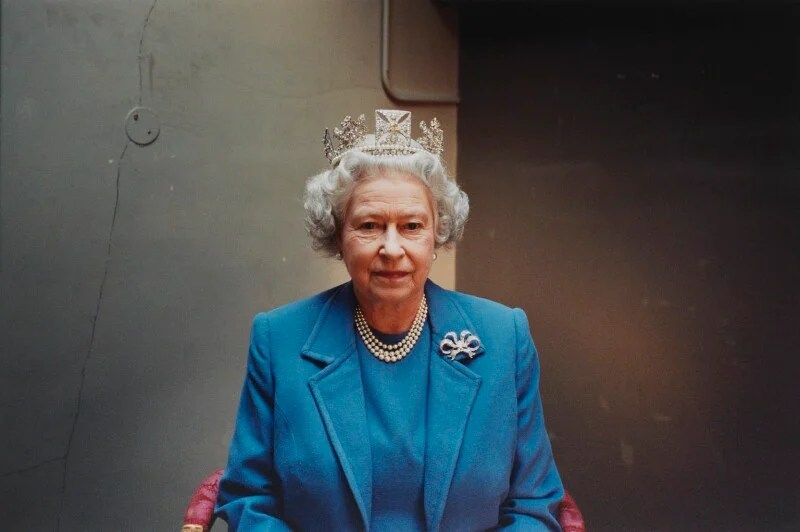
Lucian Freud’s Queen Elizabeth II (2001)
Lucian Freud, a renowned British painter, was known for his intense realism and unflinching depiction of his subjects. His portrait of Queen Elizabeth II deviates significantly from the traditional, idealized representations of royalty. The portrait is small, measuring only 23.5 cm by 15.2 cm, but it is powerful in its execution. The Queen is portrayed with a palpable sense of realism; her expression is stern, almost melancholic, and the textures of her aging skin and features are meticulously rendered.

Freud’s use of thick impasto and meticulous brushwork emphasizes the physicality and presence of the Queen. The portrait’s muted palette and detailed attention to texture and light create a somber yet compelling representation.
The painting’s raw, unembellished style offers a stark contrast to the more polished and formal portraits of the past. It challenges the viewer to see the monarch as a real person, with the weight of her years and reign visibly etched on her face.
The portrait received mixed reviews, with some critics praising its honesty and others finding it unflattering and harsh. Nevertheless, it stands as a bold statement in the canon of royal portraiture, underscoring Freud’s commitment to realism over reverence.

Jonathan Yeo’s King Charles III (2024)
Jonathan Yeo, a contemporary British artist celebrated for his modern portraiture, approached King Charles III with a distinctively different style and sensibility. His portrait of the new king is characterized by a more polished and idealized aesthetic, while still maintaining a sense of authenticity and personal insight. The vast oil on canvas shows a larger-than-life King Charles in the uniform of the Welsh Guards. The vivid red work, measuring about 8ft 6in by 6ft 6in.

Yeo employs a blend of realism and stylization, using softer brushwork and a warmer color palette. His depiction of King Charles III is dignified yet approachable, capturing both the gravitas and the human side of the monarch.
The portrait balances respect for tradition with a modern sensibility. Yeo’s attention to detail, particularly in the facial features and attire, conveys a sense of regality tempered with a touch of vulnerability, reflecting Charles’s new role and public persona.
Yeo’s portrait has been generally well-received, appreciated for its balanced portrayal. Critics have noted the skillful blend of realism and idealization, praising the work for capturing the complexity of Charles’s character and his new status as king.
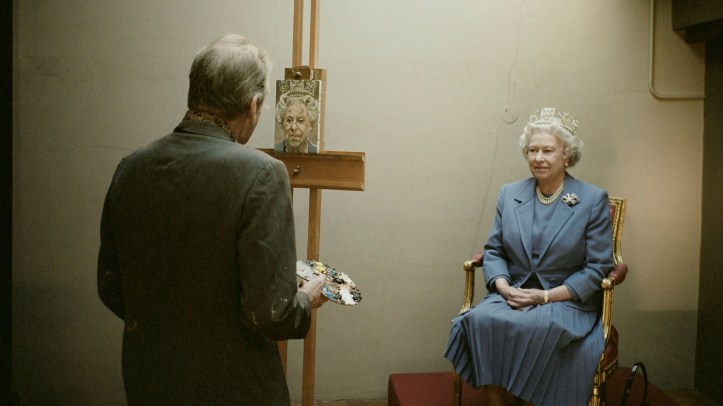
Freud’s portrait of Queen Elizabeth II has become an iconic image, emblematic of the late monarch’s long and eventful reign. The portrait’s unvarnished realism speaks to the enduring strength and resilience of Elizabeth II, highlighting the human aspect of a figure often seen as distant and symbolic. This portrayal has contributed to a broader understanding of the Queen’s personal sacrifices and the burdens of her role.
The portrait is a testament to a monarch who reigned through significant social and political changes, reflecting the steadfast yet human aspect of her leadership. By presenting the Queen in such a raw and realistic manner, Freud’s work has influenced how future generations perceive the monarchy, emphasizing transparency and authenticity.

Jonathan Yeo’s portrait of King Charles III, on the other hand, encapsulates the beginning of a new era. As the first major portrait of Charles as king, it sets the tone for his reign and public image. This portrait marks the transition from one of the longest-reigning monarchs in British history to her successor, capturing the hopes and expectations for a new chapter in the monarchy’s story.
Yeo’s depiction reinforces the idea of continuity and change, presenting King Charles III as a figure who respects tradition while also bringing his own identity and vision to the role.
Both Lucian Freud’s portrait of Queen Elizabeth II and Jonathan Yeo’s portrait of King Charles III offer profound insights into their subjects and the eras they represent. Freud’s raw realism and Yeo’s refined idealism highlight the evolving nature of royal portraiture, balancing tradition with contemporary perspectives. These portraits not only serve as artistic achievements but also as cultural artifacts, capturing the essence of their subjects and the spirit of their times.
Discover more from Art Sôlido
Subscribe to get the latest posts sent to your email.
 Art Sôlido