


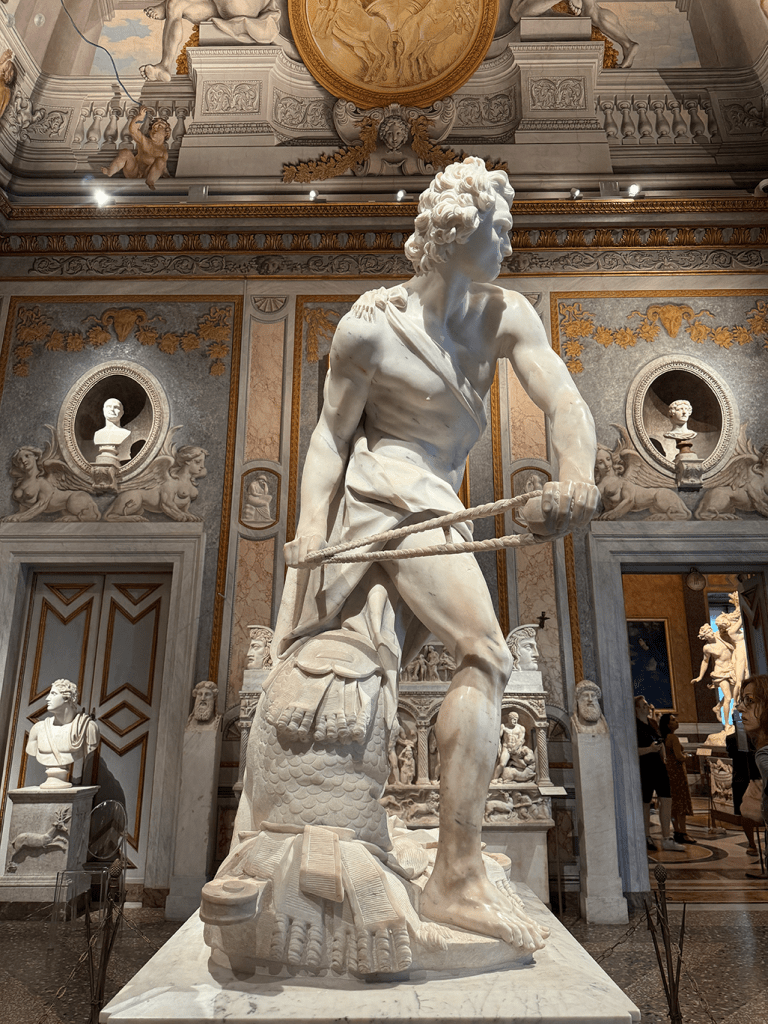
 Gian Lorenzo Bernini’s David in the Borghese Gallery is a masterpiece that encapsulates the essence of the Baroque era while distinguishing itself from its Renaissance predecessors. This life-size marble sculpture, commissioned by Cardinal Scipione Borghese and completed between 1623 and 1624, portrays the biblical hero David in a moment of intense action, capturing the drama, emotion, and dynamic movement characteristic of Baroque art.
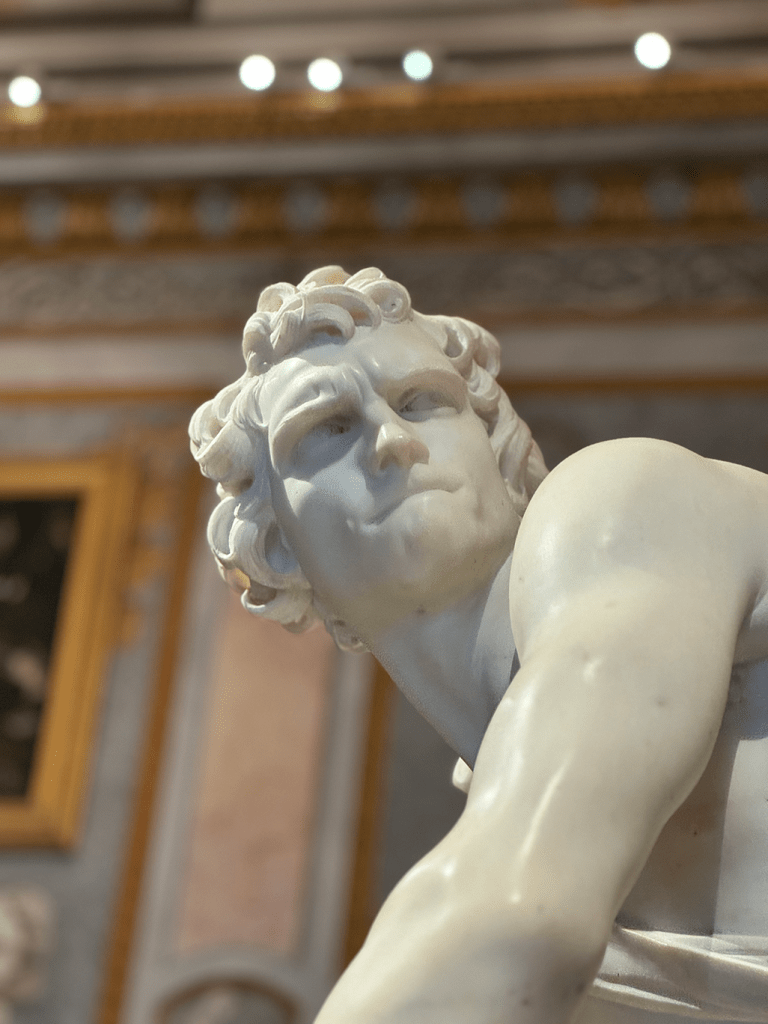
Unlike earlier depictions of David by artists such as Donatello, Verrocchio, and Michelangelo, Bernini’s David does not focus on the aftermath of victory or the contemplation of the battle. Instead, Bernini presents David in the throes of action, winding up to hurl the stone that will bring down the giant Goliath. This portrayal is not just a snapshot of physical motion but also a powerful representation of psychological intensity. David’s furrowed brows, clenched lips, and determined gaze communicate a deep concentration and resolve. The tension in his muscles and the twist of his body, captured at the peak of his effort, make the viewer almost feel the force behind the impending throw.
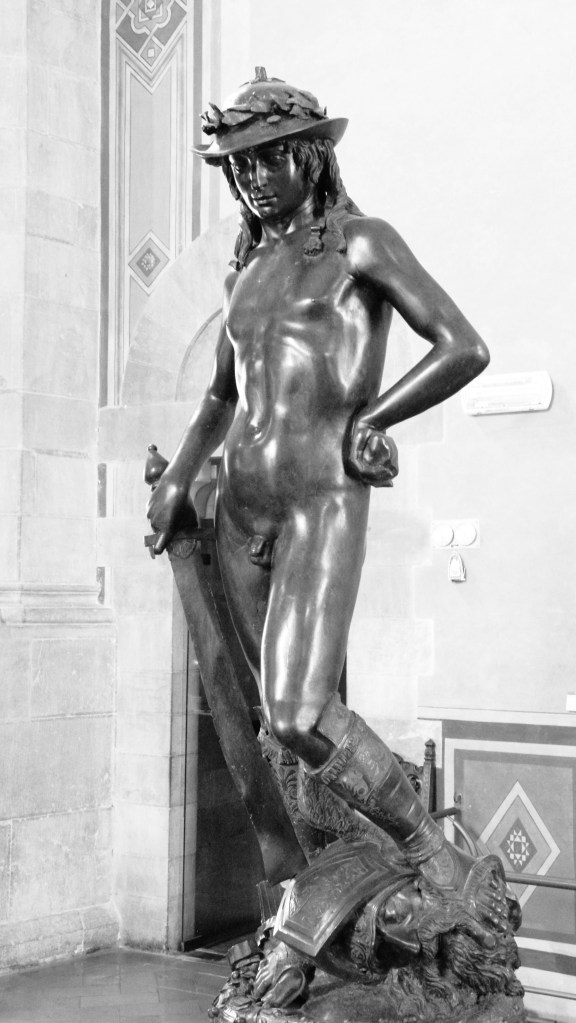

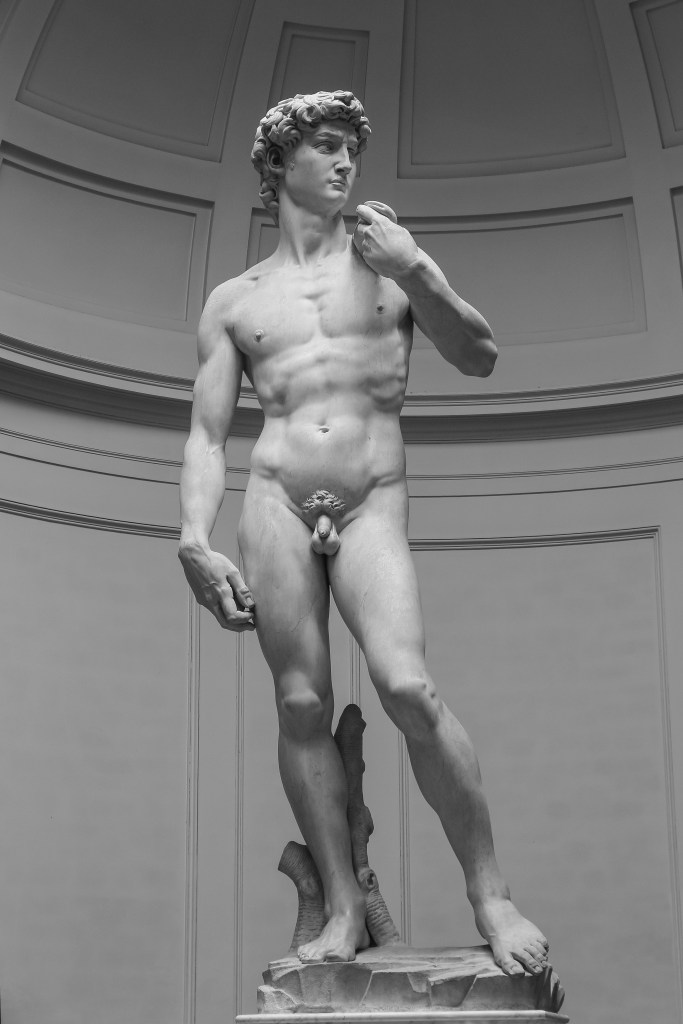
Bernini’s David breaks away from the static compositions of the High Renaissance, where figures were often arranged in pyramidal forms that emphasized stability and balance. In contrast, Bernini employs diagonal lines in his composition, a hallmark of Baroque art, to suggest movement, energy, and drama. The diagonal twist of David’s body creates a sense of dynamism that invites the viewer to engage with the sculpture from multiple angles, experiencing the unfolding narrative in real-time.

This dynamic quality is further enhanced by Bernini’s innovative use of space. Unlike the self-contained figures of Donatello or Michelangelo, Bernini’s David interacts with the space around him. The figure seems to reach out beyond its marble confines, drawing the viewer into the scene. This engagement is not just visual but also visceral; as we look at Bernini’s David, we are not merely observers but participants, instinctively reacting to the tension and energy of the moment. The sculpture creates a sense of empathy, making us feel what David feels—a characteristic feature of Baroque art, which aimed to evoke an emotional response from the viewer.
The Baroque emphasis on direct emotional appeal can be seen as a reflection of the period’s historical context. The Catholic Church, facing the challenges of the Protestant Reformation, sought to renew its connection with the faithful through art that was immediate, emotional, and accessible. Bernini’s David embodies this approach; it does not invite quiet contemplation like Michelangelo’s David, which represents an idealized beauty and a moment of thoughtful preparation. Instead, Bernini’s David demands an immediate, almost physical response, mirroring the Church’s strategy of appealing directly to the emotions of the faithful.
Bernini’s attention to realism in his portrayal of David also marks a departure from the idealized forms of the Renaissance. While Michelangelo’s David is an epitome of youthful perfection, Bernini’s David is more human, more relatable. The grimace on his face, reportedly modeled after Bernini’s own reflection in a mirror held by his friend and future pontiff Maffeo Barberini, adds a layer of authenticity to the sculpture. This realism, combined with the dynamic composition and emotional intensity, makes Bernini’s David a true masterpiece of the Baroque era.
Bernini’s David in the Borghese Gallery represents a pivotal moment in the history of art. It not only exemplifies the Baroque style with its emphasis on movement, emotion, and spatial engagement but also offers a fresh interpretation of a well-known biblical story. By focusing on the moment of action rather than the contemplation before or the victory after, Bernini creates a sculpture that is alive with tension and energy, inviting the viewer to experience the drama of David’s battle with Goliath in a deeply personal and immediate way. This ability to evoke empathy and involve the viewer so directly is what sets Bernini’s David apart as a masterpiece, both in its own time and in the broader canon of art history.
Discover more from Art Sôlido
Subscribe to get the latest posts sent to your email.
 Art Sôlido