
 Anna Vaughn Hyatt Huntington (1876–1973) was one of the most prominent American sculptors of the early 20th century, a period when female artists were notably underrepresented in the field. Born into a family with strong academic and artistic backgrounds, Huntington carved out a celebrated career in sculpture, particularly renowned for her dynamic animal sculptures, monumental equestrian statues, and her pioneering role as a female artist in New York’s competitive art scene. Her work combines vivid emotional depth with exceptional technical realism, capturing the movement, grace, and spirit of animals and humans alike. Throughout her life, New York City played a central role in Huntington’s artistic development, offering her both the inspiration and the opportunities that propelled her to international acclaim.
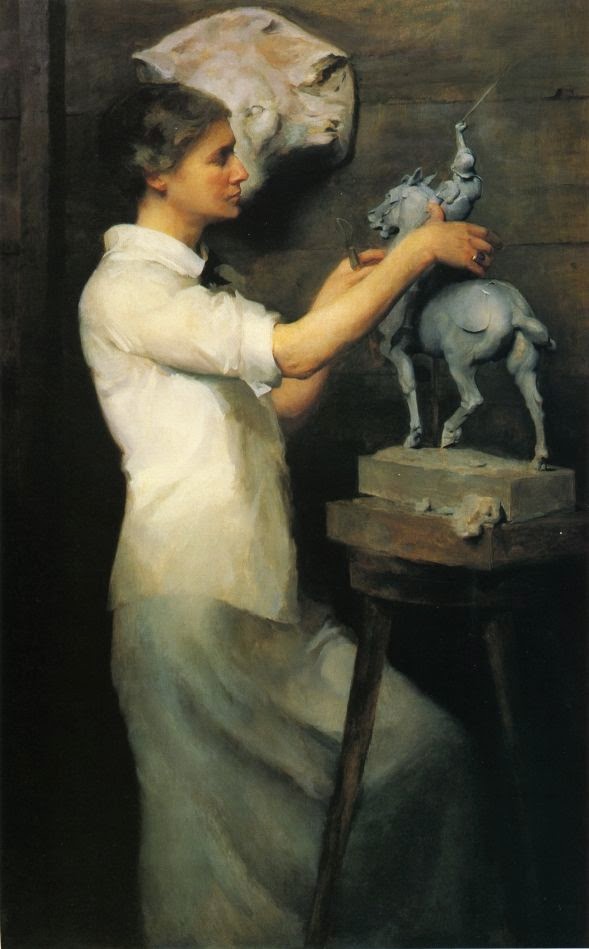
Born on March 10, 1876, in Cambridge, Massachusetts, Anna Vaughn Hyatt was raised in an intellectually stimulating environment. Her father, Alpheus Hyatt, a professor of paleontology and zoology, encouraged her early interest in animals, while her mother, Audella Beebe, was an artist. This combination of scientific curiosity and artistic sensibility profoundly influenced her work. Huntington’s early exposure to animal anatomy, particularly through her father’s work, became the foundation for her later sculptures.
Huntington studied sculpture under prominent teachers such as Henry Hudson Kitson in Boston, although her early career faced challenges. She was dismissed from Kitson’s studio after pointing out anatomical errors in his equine sculptures, demonstrating her keen eye for detail and commitment to accuracy. She then moved to New York City, where she continued her training at the Art Students League, studying with notable sculptors like Gutzon Borglum and Hermon Atkins MacNeil. Her time in New York was transformative, as it exposed her to the city’s vibrant art scene and offered invaluable opportunities to study live animals at places like the Bronx Zoo and circuses.
New York City was essential to Anna Vaughn Hyatt Huntington’s artistic growth. Upon her arrival in the city in 1902, she quickly established herself within its art community. She exhibited widely, both in the U.S. and abroad, gaining recognition for her ability to combine anatomical precision with emotional depth in her animal sculptures. New York offered the resources of world-class institutions, including the Metropolitan Museum of Art and the National Academy of Design, where Huntington could conduct research and refine her technique. The city’s bustling cultural life, its diversity, and its accessibility to natural subjects provided an ideal environment for her artistic exploration.
One of Huntington’s most notable early successes was the creation of Joan of Arc, the first public monument by a woman in New York City, erected in 1915 in Riverside Park. The statue, depicting Joan astride a horse, commemorated the 500th anniversary of the saint’s birth and was the city’s first monument dedicated to a historical woman. This accomplishment catapulted Huntington into the international spotlight, highlighting her ability to convey not only technical mastery but also the emotional resonance of her subjects.
Huntington’s artistic vision was deeply influenced by her immersion in nature and her lifelong fascination with animals. Her sculptures, often of horses, lions, and other creatures, are celebrated for their vitality and movement. She used her extensive knowledge of animal anatomy, honed through years of study and observation, to infuse her work with lifelike realism. Her animal figures were not static; they conveyed emotional depth and strength, often suggesting a narrative or psychological state. This ability to portray animals with both anatomical accuracy and expressive power became a hallmark of her style.
Her equestrian monuments, in particular, brought her widespread acclaim. These works often depicted figures in action, conveying both the grace and power of horses, while also reflecting the personalities of their human riders. Notable examples include Joan of Arc in New York, El Cid in Seville, Spain, and General Israel Putnam in Redding, Connecticut. Through these monumental works, Huntington not only contributed to the landscape of public art but also broke new ground as a woman sculptor in a male-dominated field.

Huntington’s artistic legacy is defined by her series of monumental public sculptures, particularly her equestrian works. Her Joan of Arc in New York remains one of her most celebrated pieces, marking a historic moment in both art and gender representation. In addition to this iconic monument, she created a series of statues that commemorate historical figures, celebrate national heroes, and honor the relationship between humans and nature.
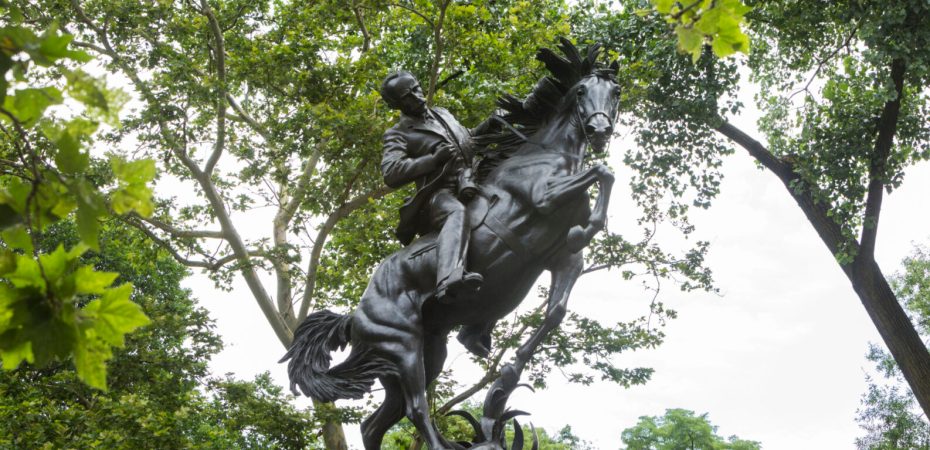
Among her other notable works are the Equestrian Statue of José Martí in Central Park, which honors the Cuban hero, and The Torch Bearers in Madrid, a large-scale work symbolizing the passing of knowledge between generations. Huntington’s ability to translate historical and allegorical subjects into powerful visual statements made her one of the leading sculptors of her time.
Her equestrian statues are particularly notable for their innovative approach to the horse-and-rider form. In works like Andrew Jackson, A Boy of The Waxhaws and The Torch Bearers, Huntington portrayed her subjects with a keen sensitivity to both human and animal emotion. Her horses, in particular, were often depicted with a sense of vitality and inner strength, imbuing them with a heroic quality. Through these works, Huntington reshaped the representation of both equestrian statues and women in the public art sphere.

In 1923, Huntington married Archer Milton Huntington, a wealthy philanthropist, and railroad magnate. The couple’s shared interests in art and nature led them to embark on several significant artistic ventures. Archer’s wealth enabled Anna to pursue her artistic vision without financial constraints, and their marriage proved to be a harmonious and supportive partnership. Together, they founded Brookgreen Gardens in South Carolina, which became the first outdoor sculpture garden in the United States, showcasing Anna’s sculptures in a natural setting.
Huntington’s dedication to nature was not limited to her art. In 1939, the Huntingtons donated a large portion of their Adirondack property to the New York College of Forestry, which was later established as the Anna and Archer Huntington Wildlife Forest. This donation, along with their philanthropic efforts in founding museums and wildlife preserves, reflected their deep commitment to preserving nature and fostering artistic expression.
Despite her many triumphs, Huntington faced significant challenges, particularly in the late 1920s when she contracted tuberculosis. For nearly a decade, she struggled with the illness, which forced her to slow down her work. However, she persevered, and her career flourished again after she and Archer moved to South Carolina in 1930. There, she found a new source of inspiration in the natural beauty of Brookgreen Gardens, where she could continue to create and showcase her sculptures.
Even in her later years, Huntington remained an active and influential figure in the art world. She continued to produce monumental works and was involved in the establishment of the Huntington Museum in New York and the Hispanic Society of America. Her final major work, Andrew Jackson, A Boy of The Waxhaws, completed when she was in her nineties, was a testament to her enduring creative spirit.

Anna Vaughn Hyatt Huntington’s career was a remarkable journey of artistic achievement, personal perseverance, and pioneering contributions to American sculpture. At a time when few women were able to make a name for themselves in the arts, she became one of the most prominent sculptors of her generation. Her work, characterized by its emotional intensity and technical precision, continues to resonate today. New York City played a pivotal role in her success, offering her the resources, inspiration, and opportunities to develop into an internationally recognized artist. Huntington’s legacy endures through her sculptures, her contributions to public art, and her philanthropic efforts, ensuring her place as a trailblazer in both art and history.
Discover more from Art Sôlido
Subscribe to get the latest posts sent to your email.
 Art Sôlido