
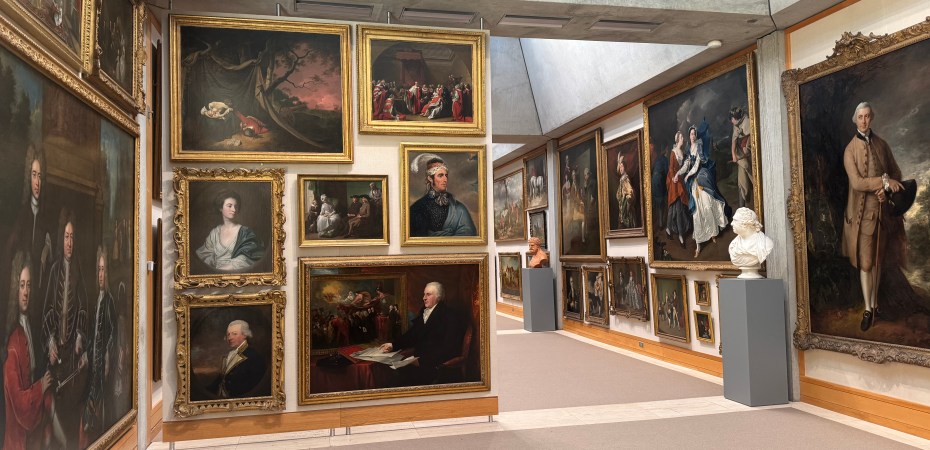
Women in the YCBA’s “In a New Light” Exhibition and Collection
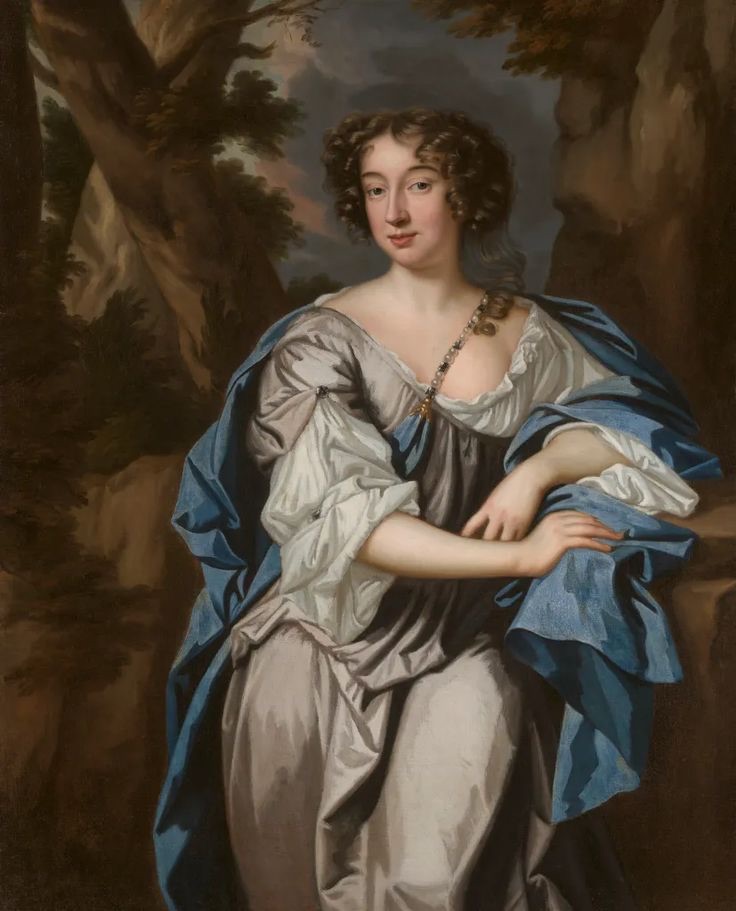
 Mary Beale, An Unknown Woman (c. 1675) – one of the relatively few works by a female artist on display in In a New Light: Five Centuries of British Art. Mary Beale was a rare successful woman painter in 17th-century Britain, and her portrait of an unknown woman (a recent YCBA acquisition) is prominently featured in the new installation. The In a New Light exhibition is a comprehensive rehang of the Yale Center for British Art’s permanent collection, spanning 500 years with 374 works from the early 1500s to today. Yet, despite this breadth, only a handful of the artists represented are women. Curators openly acknowledge this imbalance – “we all know that there were so few women artists through history,” notes YCBA curator Lucinda Lax when discussing Beale’s exceptional career. Indeed, in In a New Light the inclusion of women artists is notable precisely because it is uncommon: alongside Beale, viewers encounter works by 18th-century pioneer Angelica Kauffman, 19th–20th century painter Gwen John, and contemporary figures like Cecily Brown and Lynette Yiadom-Boakye, among only a small number of female artists highlighted.
This underrepresentation in the exhibit mirrors the makeup of the YCBA’s overall holdings. The YCBA (which holds the largest collection of British art outside the UK) has around 2,000 paintings and hundreds of sculptures and prints, but historically very few of these works have been by women. This reflects a broader pattern in art museums. A large 2019 study found that just 12% of artists in major U.S. museum collections were women. UK institutions have fared similarly: as of 2014 only 15% of artists in Tate’s collection were female, and shockingly women artists make up just 1% of the National Gallery in London’s collection The Yale Center for British Art’s collection, built initially on Paul Mellon’s British art donations (largely canonical male artists like Constable, Turner, Reynolds, etc.), has likewise been overwhelmingly male. It is only in recent years that the YCBA has begun actively acquiring and spotlighting works by women to begin to correct this imbalance. The proportion of female artists in the YCBA’s permanent collection remains very low – likely well under 10% – in line with the historical demographics of British art. In short, both the New Light exhibition and the overall collection statistics underscore the legacy of women artists being a marginal presence.

Historical Barriers and Gender Disparity in British Art Collections
The scarcity of women artists in British art museums is not a coincidence of taste, but the result of historical and structural barriers that long excluded women from professional art training, patronage, and recognition. Art institutions in Britain (as elsewhere in Europe) developed within a patriarchal social order that constrained women’s roles. For centuries, formal artistic education and academies were essentially off-limits to women. The Royal Academy of Arts in London – Britain’s premier art institution founded in 1768 – did include two women (Angelica Kauffman and Mary Moser) among its 36 founding members, but this token inclusion only highlights the broader exclusion. A famous 1771 group portrait of the Academy by Johan Zoffany pointedly depicts Kauffman and Moser not in person but as portraits on the wall, because women were barred from the live nude drawing sessions that were central to academic training. In fact, the RA did not admit women to its training schools until the 1860s, and after Kauffman and Moser, no other woman was elected a full Academician until 1922. This meant generations of women were denied the rigorous study of anatomy and life drawing deemed essential for history painting – the most prestigious genre. As art historian Linda Nochlin famously argued in her 1971 essay “Why Have There Been No Great Women Artists?”, it was institutional barriers like these – not any lack of talent – that kept women from excelling in the arts. Simply put, if an artist was not born male (and usually white and middle-class), she had little access to the formal systems of art education and mentorship that produced “great masters.”
Beyond the academy, gender norms and class constraints severely limited women’s opportunities to develop artistic careers. In early modern Britain, painting and sculpture were professional trades dominated by male guilds and workshops. Respectable women of the gentry or aristocracy might learn sketching or watercolors as an accomplishment, but pursuing art as a full-time vocation was often deemed socially improper. Those women who did persist were often from artistic families or had unusual encouragement. For example, Mary Beale’s success in the 1600s owed much to her artist husband’s support and her network of progressive patrons. Similarly, in the eighteenth and nineteenth centuries, many women artists were daughters or wives of male artists (e.g. painter Elizabeth Thompson was the daughter of an art tutor, and sculptor Anne Damer was from an aristocratic milieu that tolerated her craft). Even so, women were expected to focus on “feminine” subject matter – portraiture, domestic scenes, flowers – rather than grand historical or allegorical compositions. They also had fewer avenues to exhibit or sell work. The Royal Academy’s annual exhibitions did include women contributors (over 700 women exhibited some 3,600 works in RA shows between 1769–1830), but these works were a minority and often categorized as amateur accomplishments. Meanwhile, commercial galleries and patrons showed a strong bias for established male painters. Class played a role as well: professional art training or the leisure to pursue art generally required financial means. Working-class women had virtually no chance to become artists, and upper-class women faced the paradox that being a “professional” artist was not a fitting role for a lady. Thus, the pool of potential women artists was winnowed by both socioeconomic and gender prejudices.
Patronage systems and institutional collecting further reinforced the marginalization of women’s art. Major art patrons – from royal monarchs to wealthy collectors like Paul Mellon – tended to commission and buy works by men, largely because those men had the public reputations and academy credentials that women were denied. In British royal patronage history, we see that queens and princesses usually patronized male artists for their official portraits and court art. For instance, Queen Elizabeth I’s many iconic portraits were painted by men (Nicholas Hilliard, Marcus Gheeraerts, etc.), and Queen Victoria similarly favored male painters (she knighted Sir Edwin Landseer and regularly commissioned male academicians). Museums and national collections then canonized what the market and patrons had elevated – which was overwhelmingly the work of men. By the 20th century, when museums like the National Gallery or Tate began amassing historic British art, they were drawing from an art history that had already largely written women out. As a result, the baseline representation of women in these collections was minuscule (only 1% of the National Gallery’s collection is by women). The Yale Center for British Art, founded in the 1970s on a core collection of British classics, inherited this same imbalance. Only in recent decades have museums started re-evaluating their holdings and consciously seeking out works by women artists to fill gaps. The YCBA’s recent exhibitions (such as Art in Focus: Women From the Center in 2021) and acquisitions (like paintings by Mary Beale, or contemporary works by Tracey Emin and others) are part of this corrective effort. But reversing centuries of neglect is a slow process, and the numbers remain starkly uneven.
The Paradox of Female Monarchs and Marginalized Women Artists
It may seem ironic that Britain, a nation that produced some of history’s most powerful women rulers, did not translate those examples of female authority into a broader empowerment of women in the arts. England (and later Britain) had three long-reigning queens – Elizabeth I (1558–1603), Victoria (1837–1901), and Elizabeth II (1952–2022) – whose combined rule spans some of the heights of British cultural history. Yet during their reigns, women artists remained on the margins. This paradox highlights how having a female head of state did not equate to dismantling patriarchal structures in society or its cultural institutions. Each of these queens was an exception in a male-dominated world, and rather than heralding a new era of gender equality, they often were seen as singular anomalies that left prevailing gender norms unchanged.
Under Elizabeth I, for example, the notion of a woman ruler was so unprecedented that the queen cultivated an image of herself as essentially gender-transcendent (“I have the heart and stomach of a king,” she famously declared). Far from promoting women’s advancement generally, Elizabeth’s court still operated on strict gender hierarchies. Notably, one of the only recorded female painters of the Tudor period, Levina Teerlinc, did serve as a court miniaturist for Elizabeth (having earlier worked for Elizabeth’s half-sister Mary I). Teerlinc’s presence was a rarity – she was Flemish-born and likely hired due to her extraordinary skill – and she left no broader legacy of female artists in England. The artistic glories of Elizabeth’s reign (the “Elizabethan Golden Age”) were in literature, music, and portrait painting, all domains dominated by men. Elizabeth herself, as a patron, commissioned portraits from distinguished male artists and did not use her power to institute any formal support for women in the arts. The status of women in Elizabethan society remained circumscribed by law and custom – women could not join guilds or attend the few art academies that existed on the continent, and they were largely excluded from the professional artistic networks of the time. In short, Elizabeth I’s reign, while symbolically placing a woman at the apex of power, did not materially change the fact that art and learning were “for men” in the 16th century.

Moving forward to the Victorian era, the disjunct becomes even more pointed. Queen Victoria presided over an age of industrial progress and cultural flourishing – yet Victorian social norms idealized women as wives and mothers, not as public creators. In fact, the term “Victorian” is often synonymous with conservative gender roles: the ideal of the “angel in the house” who is virtuous, domestic, and devoted to family. Victoria herself embodied traditional femininity in many ways (she celebrated domestic life and was a prolific mother of nine), and she was not an advocate for women’s rights – she opposed women’s suffrage as “a wicked folly,” reflecting how even a queen could reinforce patriarchal attitudes. In the art world, Victorian Britain saw burgeoning art institutions (museums, academies, professional societies), but women struggled to gain a foothold within them. The Royal Academy School finally admitted women students in 1860, during Victoria’s reign, yet those women had to sketch from plaster casts rather than nude models and were effectively segregated within the program. No woman gained full membership in the Academy during Victoria’s lifetime. Some women artists did achieve a measure of fame in this period – for instance, Elizabeth Thompson (Lady Butler) earned acclaim in 1874 for her military painting The Roll Call, which Queen Victoria herself admired. But even this celebrated female painter was narrowly defeated when up for election to the Royal Academy, losing by just two votes in 1879 (and it would be another half-century before a woman, Dame Laura Knight, became a full RA member in 1936). The Victorian art scene remained a male preserve: the leading Pre-Raphaelite and Academic painters were men, major public commissions (like history murals or royal portraits) went to men, and women were generally confined to lesser genres or informal art circles. Class restrictions compounded this – upper-class women could dabble in art but not pursue it as a serious profession without social censure, while working-class women had little access to artistic training at all. Thus, despite a reigning queen who was the nominal patron of the Royal Academy and other institutions, the Victorian system of art education and patronage largely excluded women. The long female reign did not translate into female artists’ visibility; instead, the era entrenched the notion that serious art was a man’s realm, even as women made incremental gains in access.

In the modern era of Elizabeth II, one might expect more progress – and indeed, by the late 20th century, many legal and educational barriers for women had lifted. Women could attend art school (by the 1950s and 60s, they were present in large numbers at the Slade, Royal College of Art, etc.), and the feminist movement of the 1970s onward actively challenged museums and galleries to represent women artists. However, even during Elizabeth II’s 70-year reign, change was slow in coming to institutions. The monarch’s role by this time was largely ceremonial; Queen Elizabeth II served as patron of the Royal Academy and other arts organizations, but these institutions only gradually diversified their collections and leadership. Well into the 21st century, the statistics remained bleak: as noted, the National Gallery in London only staged its first-ever solo exhibition by a historical female artist (Artemisia Gentileschi) in 2020. – near the end of Elizabeth II’s rule. And it took until 2023 for the National Gallery to acquire a painting by Artemisia for its collection. Similarly, the Tate galleries only in recent decades have begun to approach parity in their contemporary acquisitions, but their historic British art holdings remain dominated by men. In short, the presence of a woman on the throne from 1952–2022 did not automatically foster institutional gender equity in art museums. What it did coincide with – thanks to broader social change, not the monarch – was the rise of many prominent women artists in Britain (from sculptors like Barbara Hepworth and Elisabeth Frink to contemporary stars like Tracey Emin, Rachel Whiteread, Cornelia Parker, and Cecily Brown). These artists finally had opportunities that their predecessors lacked, but they still faced the legacy of bias in critical reception and collecting. Only in recent years have museums begun actively rebalancing the narrative, as seen in exhibitions like “Now You See Us” at Tate Britain in 2023 which spotlighted women artists long overlooked. As historian Katy Hessel noted, the surrounding structures of the art world – from gallery representation to museum boards – continue to reflect male-dominated biases, even if overt barriers have fallen.

In summary, the underrepresentation of women artists at the Yale Center for British Art – whether in the new Five Centuries exhibition or the wider collection – is a microcosm of a longstanding gender disparity in art. Women artists are present, but vastly outnumbered, constituting only a small fraction of the artists on view. This imbalance stems from deep-rooted historical factors: for centuries, women in Britain (as elsewhere) were denied equal access to artistic training, professional networks, and patronage due to prevailing gender norms, class limitations, and institutional biases. The fact that Britain was governed at times by powerful women did little to trickle down to the art world’s structure – a female monarch could reign over a flourishing artistic culture in which nearly all the creators were men. Gendered expectations, restrictive academies, and patronage systems built by and for men ensured that women’s artistic contributions remained sidelined. It is only in recent generations that these structures have begun to be challenged. Today, museums like the YCBA are critically re-examining their collections, celebrating female artists in special exhibitions, and acquiring more works by women in an effort to rebalance the scales. These initiatives, coupled with scholarly research shedding light on forgotten women artists, are gradually illuminating the rich but long-neglected heritage of women’s art in Britain. The reigns of Elizabeth I, Victoria, and Elizabeth II remind us that individual women can make history, but systemic change requires sustained societal shifts. In the arts, those shifts are finally underway – casting new light on women artists, past and present, and ensuring their inclusion in Britain’s artistic narrative.
For more information, please visit the Yale Center for British Art
Discover more from Art Sôlido
Subscribe to get the latest posts sent to your email.
 Art Sôlido