
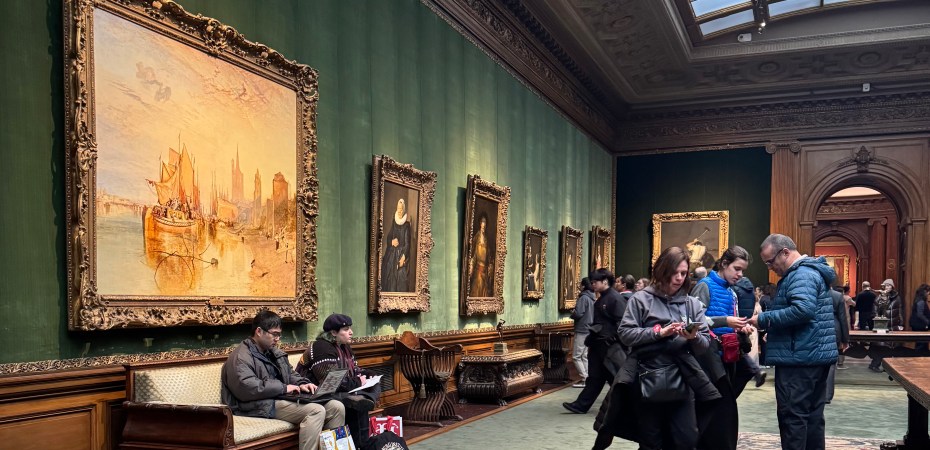
New York has many museums, but only a few still feel like a conversation.
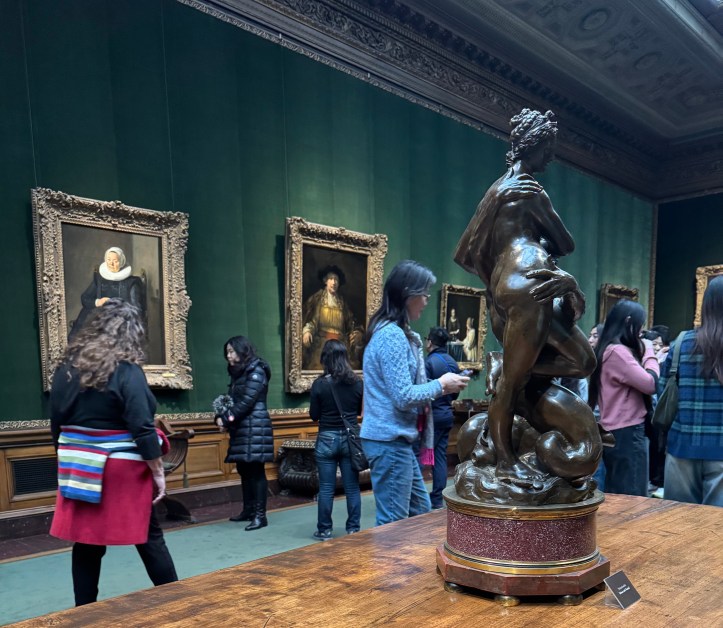
 The Frick Collection belongs to that rare category, a place where paintings are not displayed so much as encountered, where silence becomes part of the curatorial method, and where the domestic scale of a Gilded Age home turns art history into lived experience. Founded through the bequest of industrialist Henry Clay Frick (1849–1919), who left his mansion, paintings, sculpture, and decorative arts to the public, the museum opened in 1935 as both a gift and a proposition: intimacy could be a cultural value.
More than a century later, the Frick has not abandoned that idea. Instead, it has renovated it.
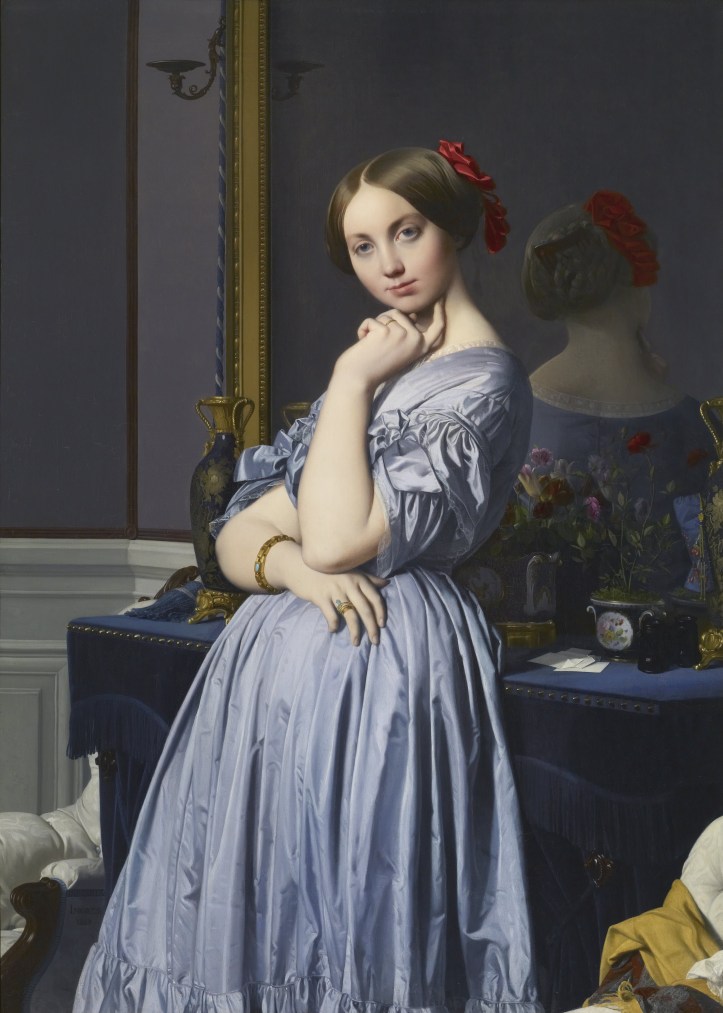
From Private House to Public Institution
Frick commissioned the residence in 1913, envisioning from the beginning that it would eventually become a public resource dedicated to encouraging the study of the fine arts. After his death, architects adapted the building into a museum, adding galleries and the now iconic Garden Court while preserving the feeling of a lived interior rather than an institutional container.
The collection today holds approximately 1,800 works spanning the Renaissance through the early twentieth century. Less than half came from Frick’s original bequest, an important detail because the museum was never meant to remain static. Over decades it expanded through acquisitions and gifts of decorative arts, portrait medals, porcelain, clocks, drawings, and pastels, strengthening the house without overwhelming it.
Alongside the museum, Helen Clay Frick founded the Frick Art Research Library in 1920, now one of the world’s major art history research centers, free to scholars and the public. The Frick therefore always functioned as a dual organism: a place of aesthetic experience and a place of intellectual inquiry.
But by the twenty first century, a paradox appeared.
How does a museum dedicated to intimacy serve a mass audience?
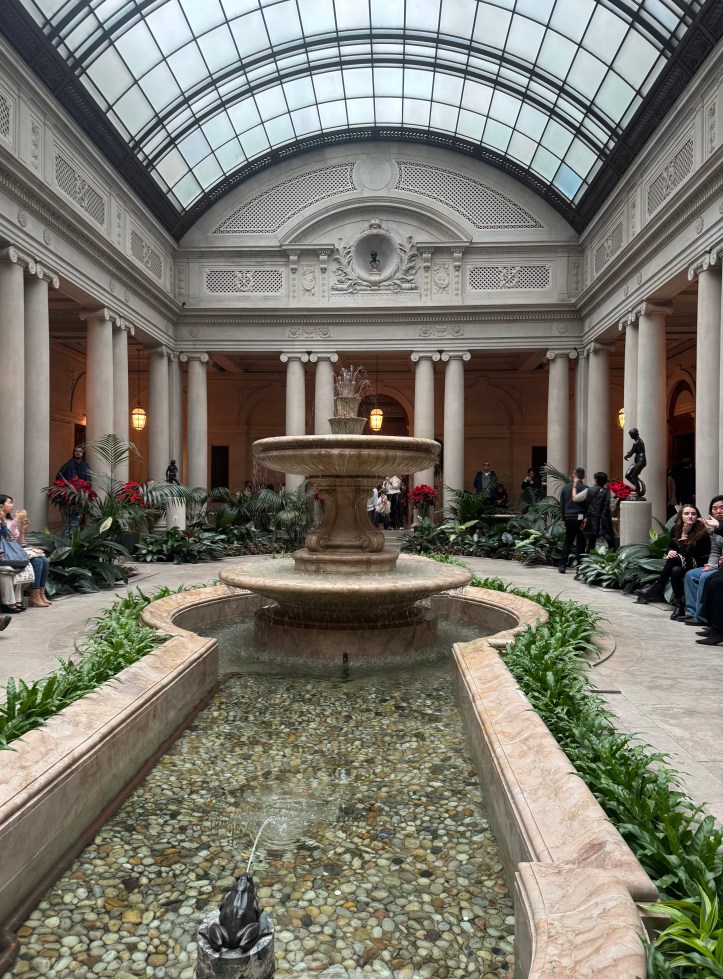
The Renovation as Philosophy (2021–2025)
The recent five year renovation, the first comprehensive one in nearly ninety years, was not simply architectural. It was conceptual.
When the museum reopened in April 2025, the visible changes were elegant but discreet: restored galleries, new education spaces, improved accessibility, visitor amenities. Yet the real transformation occurred in something less visible, institutional culture.
During the closure, the collection temporarily moved to the Marcel Breuer building, known as Frick Madison. That displacement became an experiment. The Frick learned how its art behaves in a modernist environment and, more importantly, how audiences behave when intimacy disappears. The lesson was clear. People loved the art, but they missed the relationship.
So the renovation did not attempt to modernize the Frick into a conventional museum. Instead, it modernized how the museum understands visitors.
Reinventing the Visitor Experience
Rather than focusing only on architecture, the institution reorganized internally. Visitor Services merged into External Affairs under Marketing, allowing the museum to study the visitor journey holistically, before, during, and after the visit.
From there, something unusual happened: the Frick borrowed methods not from museums but from hospitality culture. Staff researched service models, conducted interviews across institutions, and built a framework rooted in empathy rather than efficiency.
They articulated a shared purpose:
“We inspire wonder and connection by creating welcoming spaces that encourage exploration.”
Then they translated that purpose into five operational values: belonging, respect, information, connection, and helpfulness.
These were not slogans. They became behavioral guidelines, specific actions staff could practice daily.
Workshops, collaborative exercises, and visitor journey mapping followed. Employees imagined four archetypal visitors: dedicated fans, art enthusiasts, tourists, and younger audiences, identifying emotional friction points as carefully as architectural ones. Training emphasized listening, curiosity, improvisation thinking, and co creation with visitors.
The result was radical not because it was technological but because it was human. The museum began treating experience as a curatorial medium.
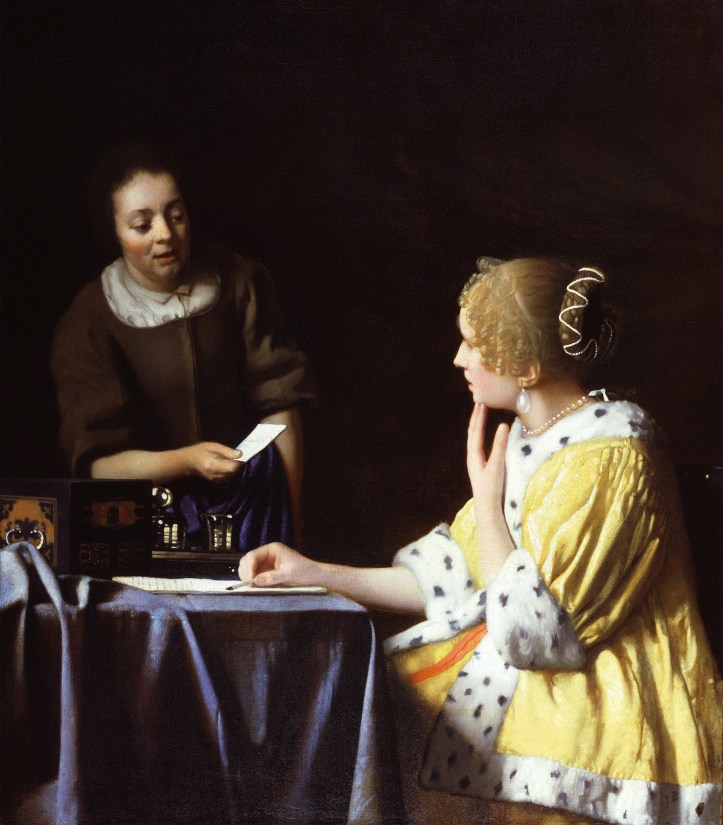
Why This Matters Beyond the Frick
Many museums renovate buildings.
Few renovate relationships.
The Frick’s project has become a model for institutions facing the central dilemma of the contemporary museum: audiences have changed faster than galleries have. Digital culture has trained visitors to expect agency, personalization, and dialogue, yet traditional museums still operate through one directional authority.
The Frick demonstrates an alternative path:
Preserve the object, redesign the encounter.
Rather than competing with spectacle museums through scale or screens, it strengthened its identity and updated its internal culture to support it. The innovation is not technological but operational, a framework that museums of any size can adapt.
Its implications are significant:
Historic institutions can modernize without aesthetic compromise
Visitor experience can unify departments across an organization
Training culture can matter as much as architectural expansion
Accessibility includes emotional accessibility, not only physical access
Intimacy can function as a contemporary strategy, not nostalgia
In an era when museums often measure success in attendance numbers, the Frick measures it in memory.
The Twenty First Century Museum
The Frick Collection now stands as a quiet manifesto for the future museum. Not a theme park, not a shrine, but a social space structured around attention.
The renovation proves that adaptation does not require abandoning identity. Instead, it requires clarifying it and aligning every aspect of the institution, architecture, staff culture, language, and visitor expectations, around that core.
The lesson other institutions are beginning to recognize is simple but difficult:
The museum of the future will not be defined by how much it shows, but by how deeply it allows people to look.
At the Frick, the house remains the same.
What changed is how the house listens.
Discover more from Art Sôlido
Subscribe to get the latest posts sent to your email.
 Art Sôlido