
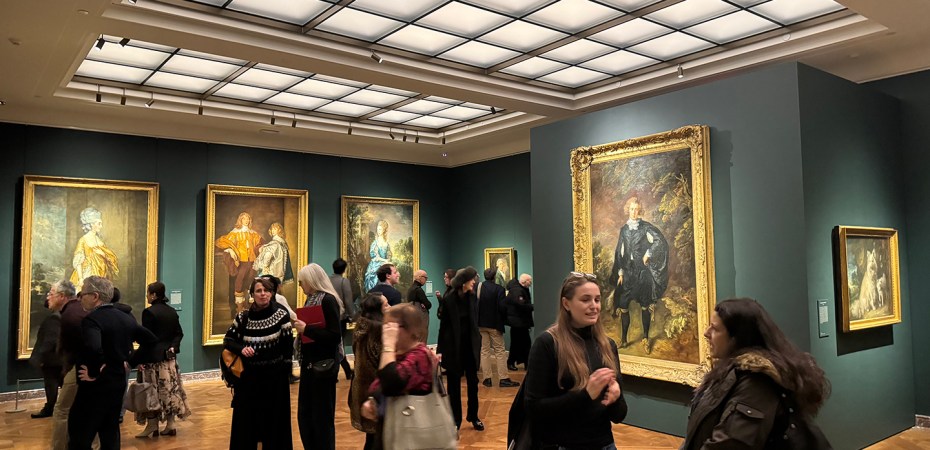
Identity, status, and self-invention at The Frick Collection
 With its recent reopening and newly expanded galleries, The Frick Collection has achieved something rare in New York: it feels at once renewed and unchanged. The exhibition and these spaces make the Frick perhaps the newest of the old museums of the city, a place where restoration has not erased memory but sharpened it. You do not enter a redesigned institution so much as a familiar voice speaking more clearly.
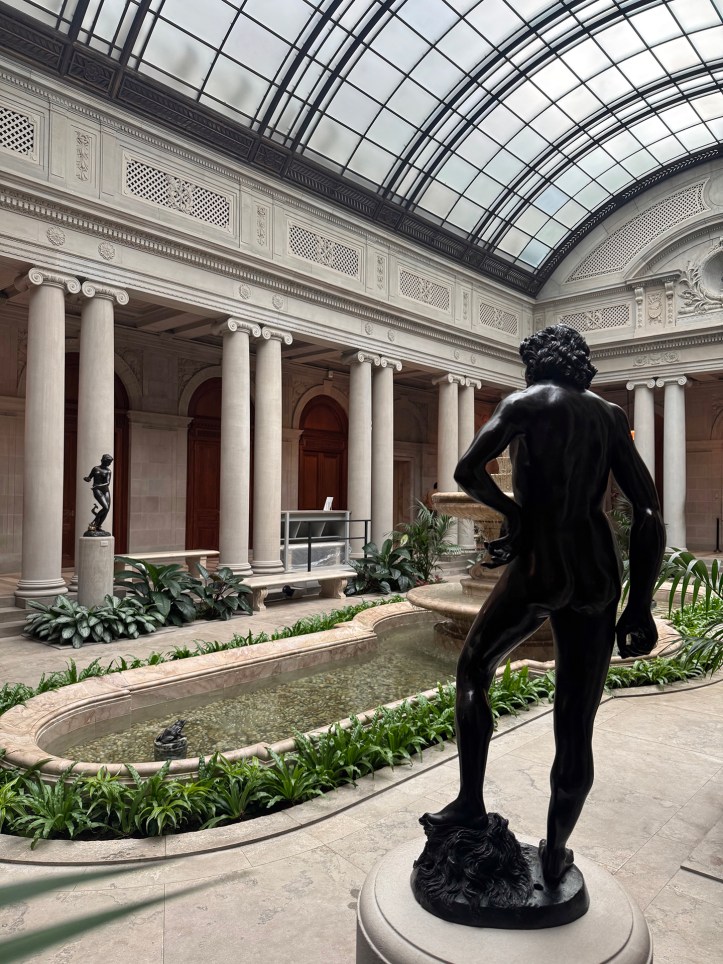
There is something fitting, almost poetic, about encountering Thomas Gainsborough here. Not simply because the museum houses one of the most intimate collections of eighteenth century painting in America, but because the Frick itself is a portrait, a domestic space permanently dressed for public life. A mansion performing museumhood. In that sense, Gainsborough: The Fashion of Portraiture does not feel like a temporary exhibition installed inside a building; it feels like a historical conversation resumed after a long interruption.
This is the first New York exhibition devoted specifically to Gainsborough’s portraiture, assembling works from collections across Britain and North America to examine the relationship between painting and fashion in the eighteenth century. Yet the word fashion quickly proves insufficient. What the exhibition really studies is self construction, the moment when European society began to understand identity as something that could be manufactured visually.
Gainsborough painted at the exact historical instant when people began to suspect that who they were and how they appeared might not be the same thing.
Painting the Present
Portrait painters had long solved the problem of time by escaping it. They dressed their sitters as Romans, gods, shepherds, allegories, anything that would age gracefully. Gainsborough refused. He insisted on the modern. He knew contemporary clothing would quickly look dated, yet he preferred that risk because invented costume destroyed likeness.
This decision is the secret engine of the exhibition. Every canvas contains a paradox: garments designed to be current become historical documents, while the human presence meant to be temporary becomes permanent.
Fashion decays. Personality remains.
The show therefore reads less like a survey of an artist than like a chronicle of a society learning to see itself.
Land, Marriage, and Ownership
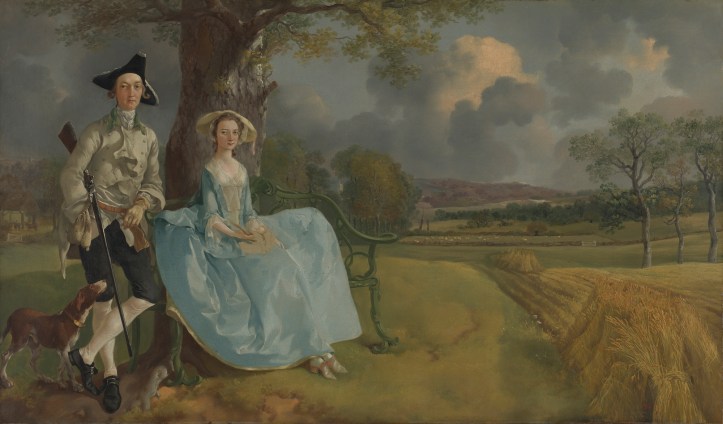
Early in the exhibition appears Mr. and Mrs. Andrews, and with it the revelation that Gainsborough’s portraits are rarely about individuals alone. The couple sit politely beneath a tree, but the real subject stretches behind them in gold and green, cultivated land. The fields are painted with such descriptive care that the estate itself becomes identity.
The painting quietly defines eighteenth century selfhood: a person equals property.
Marriage equals consolidation.
Landscape equals biography.
The figures seem relaxed, but their stillness carries the calm authority of ownership. They do not inhabit nature, they administer it.
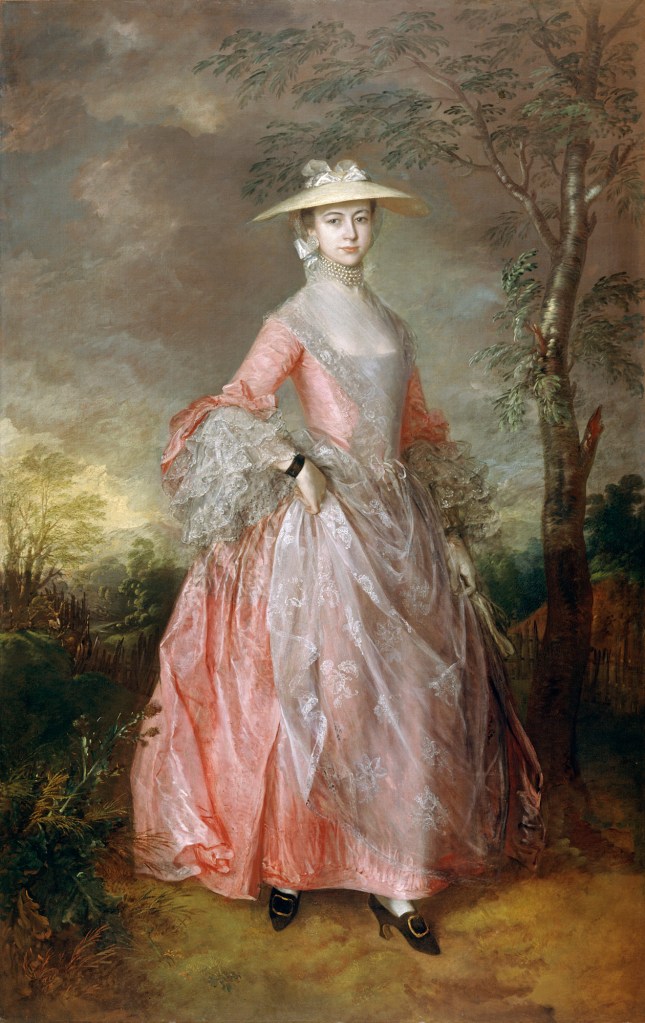
Thomas Gainsborough (1727–1788), Mary, Countess Howe, 1763–64
Oil on canvas, 94 15/16 x 60 3/4 in, English Heritage, Kenwood House, London, © Historic England / Bridgeman Images
Becoming Visible
A different tension animates Mary, Countess Howe. Here the brush slows down around lace, ribbon, hat brim, the careful choreography of a new aristocrat entering visibility. The portrait does not merely display wealth; it manufactures legitimacy. To be fashionable in the eighteenth century meant not simply well dressed but socially authenticated, recognized as belonging to a certain moral and reputational order.
Gainsborough paints not elegance but admission into a system.
Nearby, aristocratic assurance takes a more inherited form in Mary, Duchess of Montagu. Yet the exhibition wisely places her within a broader social spectrum, and the shock arrives with Ignatius Sancho. Born into enslavement, Sancho appears not in servant’s livery but in a gentleman’s coat and waistcoat. The transformation is subtle but immense. Clothing becomes argument.
In Gainsborough’s hands, portraiture begins to destabilize hierarchy.
He does not abolish rank, he exposes how fragile its visual signals are.
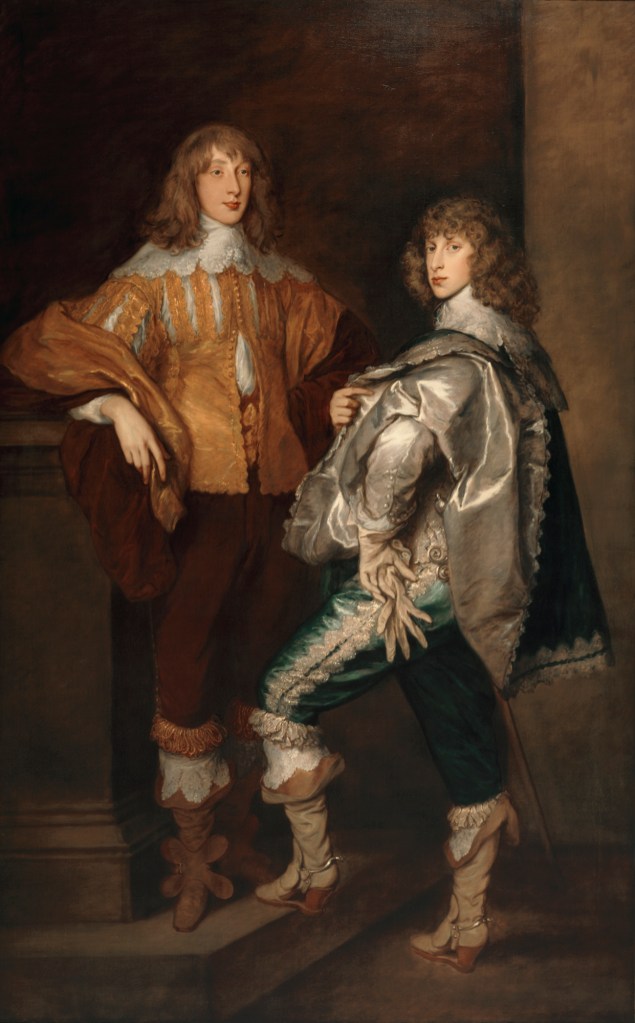
Thomas Gainsborough (1727–1788), Lords John and Bernard Stuart, after Anthony van Dyck, ca. 1765, Oil on canvas, 92 1/2 x 57 1/2 in, Saint Louis Art Museum
Aristocracy as Performance
The elegant theatricality of Lords John and Bernard Stuart reveals another layer of this visual culture. Their satin surfaces shimmer with youth and expectation; their poses feel practiced rather than natural. Gainsborough understands aristocracy as rehearsal, a role learned early and perfected publicly. These are not boys posing for a portrait, they are heirs rehearsing adulthood.
Fashion here functions as pedagogy.
The body learns status through costume.
And yet, unlike heroic idealization, Gainsborough allows vulnerability to remain. The brushwork softens edges and dissolves certainty. Identity looks worn rather than worn in.
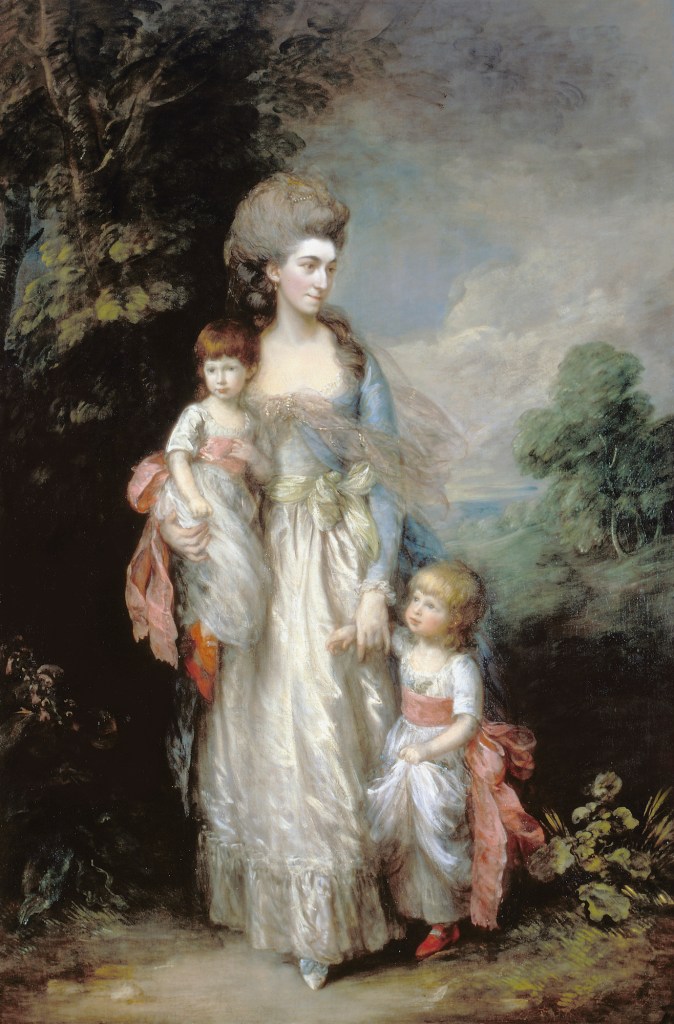
Thomas Gainsborough (1727–1788), Mrs. Samuel Moody and Her Sons, Samuel
and Thomas, ca. 1779, reworked ca. 1784, Oil on canvas, 92 1/8 x 60 11/16 in, Dulwich Picture Gallery, London, © Dulwich Picture Gallery / Bridgeman Images
Time Enters the Canvas
One of the exhibition’s most poignant works, Mrs. Samuel Moody and Her Sons, Samuel and Thomas, reveals the portrait not as a fixed moment but as an adjustable one. The painting was reworked after a death.
Gainsborough updates memory the way society updates fashion. The image becomes both commemoration and correction, a family arranged not as it existed but as it needed to be remembered.
Here portraiture approaches literature.
Narrative replaces description.
The Workshop and the Market
The presence of Gainsborough Dupont, the artist’s nephew and assistant, quietly acknowledges the studio behind the elegance. Gainsborough insisted on painting his own draperies because clothing was central to the psychological effect of the image. The painter becomes tailor; likeness becomes tailoring.
And with James Christie the modern art world enters the room. The auctioneer embodies the moment portraiture intersects commerce, reputation translated into market value. The eighteenth century discovers branding. The sitter is not only an individual but a public identity circulated socially.
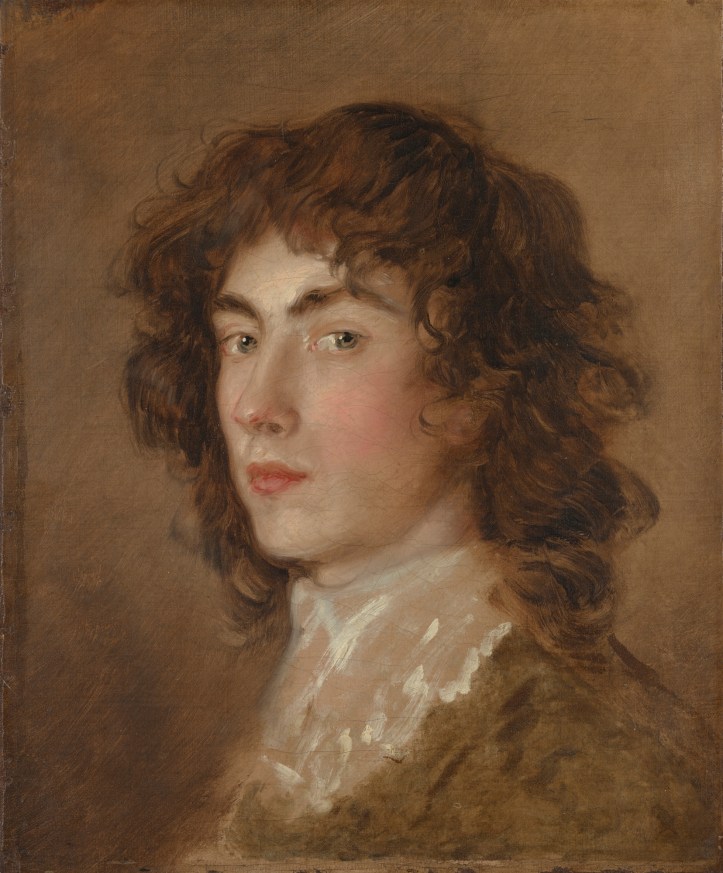
Thomas Gainsborough (1727–1788), Gainsborough Dupont, ca. 1770–72, Oil on canvas, 17 15/16 x 14 3/4 in, Tate, London
A Society Made of Appearances
Throughout the exhibition one recognizes a larger argument: in Gainsborough’s Britain clothing communicated profession, rank, morality, and occasion, an entire vocabulary instantly legible to contemporaries.
We see beauty; they saw information.
The portraits therefore operated simultaneously as likenesses and announcements. They were social media before media, images meant to travel across rooms, houses, cities, and generations.
The Modernity of Gainsborough
What makes the exhibition unexpectedly moving is how contemporary these paintings feel. They do not proclaim stable truths. They negotiate perception. Gainsborough paints people aware of being seen.
He senses that identity is no longer inherited but performed, not a fact but a presentation.
Standing inside the Frick, itself a Gilded Age home converted into a public institution, the parallels become difficult to ignore. The mansion once performed private wealth; now it performs cultural memory. Gainsborough’s sitters performed rank; now they perform history.
The exhibition reveals portraiture at the moment it stopped depicting society and began participating in it.
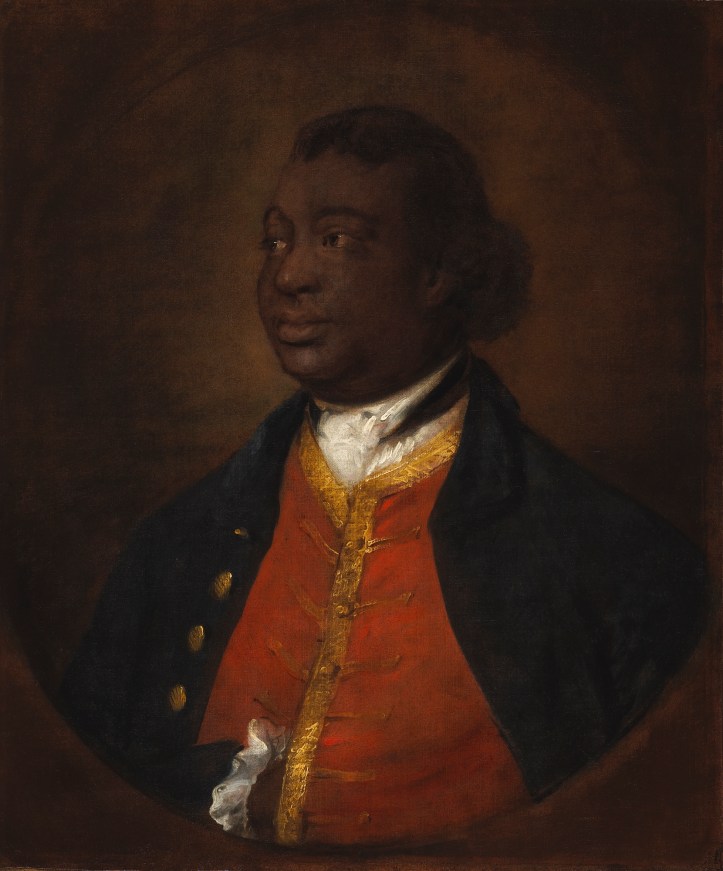
Thomas Gainsborough (1727–1788), Ignatius Sancho, 1768, Oil on canvas, 29 x 24 1/2 in, National Gallery of Canada, Ottawa
The portrait of Ignatius Sancho is, quietly, one of the most radical works in the exhibition.
At first glance it appears to be a conventional eighteenth century bust portrait: neutral background, soft light, an elegantly dressed gentleman calmly meeting the viewer’s gaze. But the power of the painting lies not in its composition, but in its context. Sancho was not an aristocrat or landowner like many of Gainsborough’s sitters. He was born on a slave ship, enslaved in childhood, and later in England became a composer, writer, shopkeeper, and a recognized intellectual figure in London society.
Gainsborough portrays him dressed as a gentleman: coat, waistcoat, white shirt, composed posture. He is not shown as a servant nor as an exotic accessory, which was the usual role assigned to Black figures in European portraiture of the period. Here he occupies the entire image. The artist does not describe him as an attribute of someone else’s status, but as a self-contained individual.
That pictorial decision is crucial.
In Georgian visual culture, clothing immediately communicated social hierarchy. To paint Sancho in the attire of a gentleman was not merely a polite gesture; it granted him a public identity legible within the visual language of the elite. Gainsborough neither idealizes nor caricatures him. He observes him. The expression is reflective, almost inward, carrying the psychological presence the artist reserved for his most important patrons.
The painting matters because it quietly shifts the structure of European portraiture. It does not erase social difference, but it demonstrates that dignity could be visible beyond aristocracy. Instead of representing race as condition, it represents the person as presence.
Within Gainsborough: The Fashion of Portraiture, the work becomes a turning point: it reveals that fashion did not only construct status, it could construct visual citizenship.
The portrait does not claim that Sancho belongs to the elite.
It suggests something more modern: that he can be seen as an individual within it.
In the end, Gainsborough: The Fashion of Portraiture is not about eighteenth century clothing. It is about the birth of the modern self, the realization that appearance can construct reality. Gainsborough understood that painting did not simply preserve a person; it stabilized a version of them the world could believe in.
He painted people becoming who they hoped to be.
Two centuries later, we recognize ourselves in the attempt.
The exhibition is on view at The Frick Collection from February 12 to May 25, 2026.
For more information, please visit The Frick Collection.
Discover more from Art Sôlido
Subscribe to get the latest posts sent to your email.
 Art Sôlido