
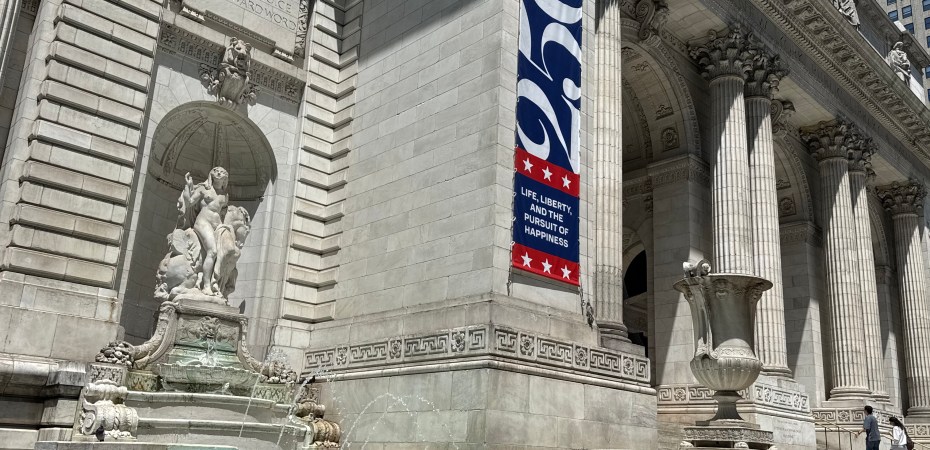
250 Years of Life, Liberty, and the Pursuit of Happiness at The New York Public Library
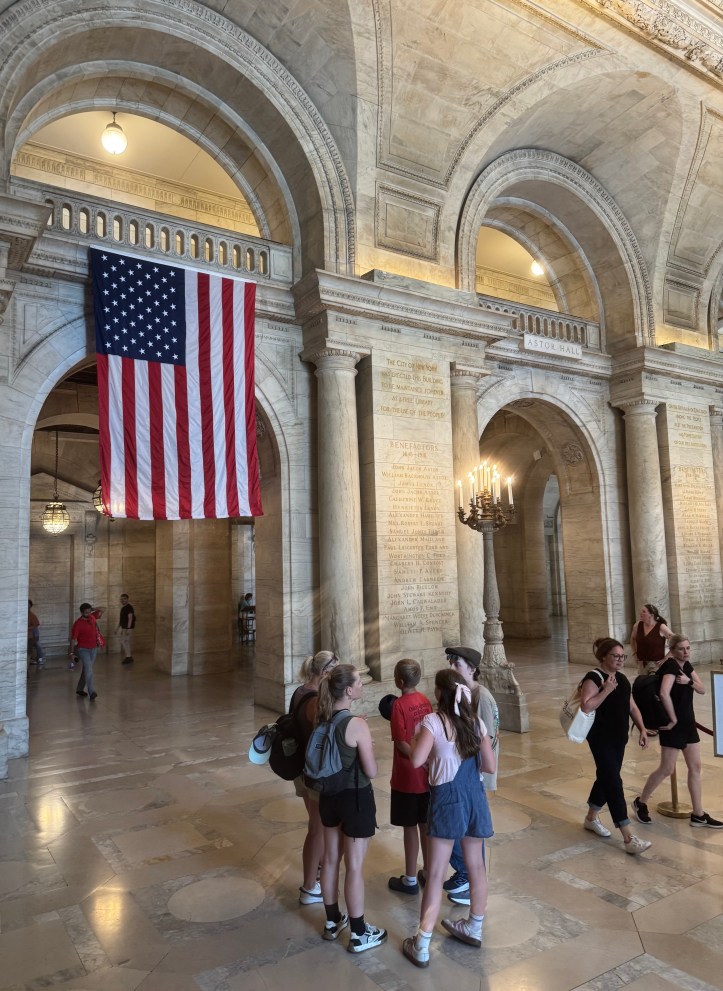
 Two hundred and fifty years after the signing of the Declaration of Independence, The New York Public Library presents Declaring America: 1776 and Beyond, one of the most ambitious and timely historical exhibitions currently on view in New York City. Spread across several galleries in the Stephen A. Schwarzman Building, the exhibition brings together founding documents, letters, manuscripts, protest artifacts, contemporary artworks, and historical materials that trace the complex conversation that has defined the United States from 1776 to the present day.
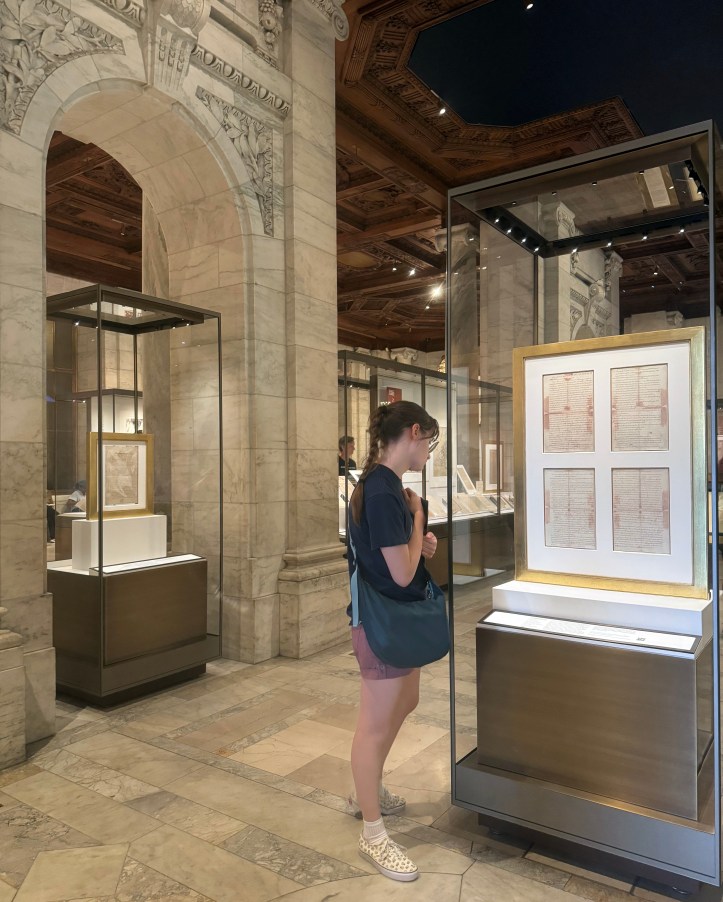
The exhibition begins where it all began: with the Declaration of Independence. Here, visitors encounter one of the Library’s greatest treasures, a rare handwritten fair copy of the Declaration prepared by Thomas Jefferson himself in the days immediately following July 4, 1776. Before ratification, the Continental Congress made several changes to Jefferson’s original draft, including the removal of a lengthy condemnation of the slave trade, a revision intended to satisfy delegates from Georgia and South Carolina. Disturbed by some of these alterations, Jefferson produced a small number of handwritten copies preserving his original text and distributed them among trusted friends. The version preserved by The New York Public Library is one of only a handful known to survive. Standing before it is a powerful reminder that the nation’s founding ideals emerged not from unanimity, but from debate, compromise, contradiction, and dissent.
Yet this exhibition does not seek to present an idealized vision of the past. Instead, it invites visitors to confront the contradictions that have accompanied the nation since its founding.
The promise that “all men are created equal” exists alongside the realities of slavery, the exclusion of women, the displacement of Indigenous peoples, and the many struggles different groups have undertaken to claim rights that were initially denied to them. The exhibition reminds us that American history is not a straight line but an ongoing process of debate, disagreement, progress, and setbacks.
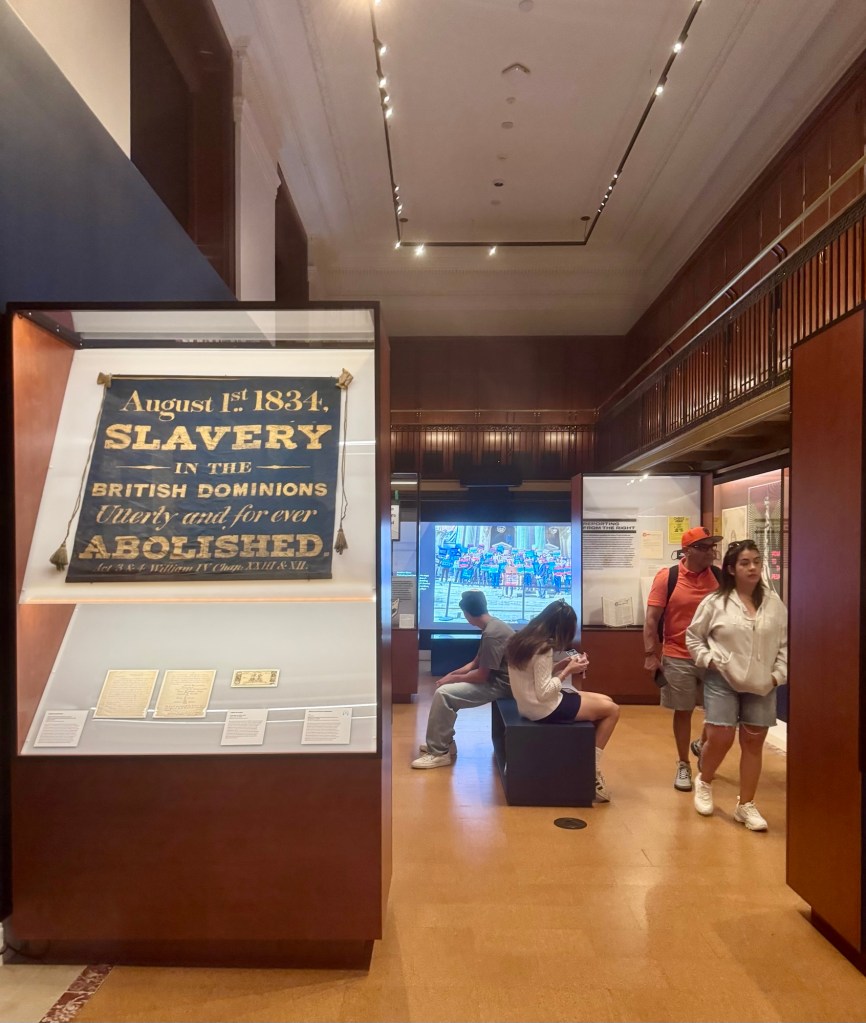
One of the greatest curatorial achievements of Declaring America is its ability to bring together a wide range of voices, including those that sharply disagree with one another. In the galleries devoted to protest, visitors will find slogans, posters, buttons, photographs, and documents from movements that some will support and others may reject. Certain images, ideas, and messages may feel uncomfortable. Others may inspire admiration. Yet all are part of the same national conversation that has unfolded over the past two and a half centuries.
As one moves through the exhibition, it becomes clear that it is not only about the history of the United States. It is also about the extraordinary preservation work carried out by The New York Public Library. Every document, poster, letter, and artwork stands as evidence of the institution’s commitment to preserving, studying, and presenting our collective memory. For more than a century, the Library has gathered the material record of history as that history was being made.
Today, in an age of instant information, fragmented narratives, and content generated by artificial intelligence, the opportunity to stand before original documents and examine authentic traces of the past feels more important than ever. Seeing Jefferson’s handwriting, reading a letter from the Revolutionary era, or viewing an object used in a historic protest creates a connection that no screen can fully replicate.
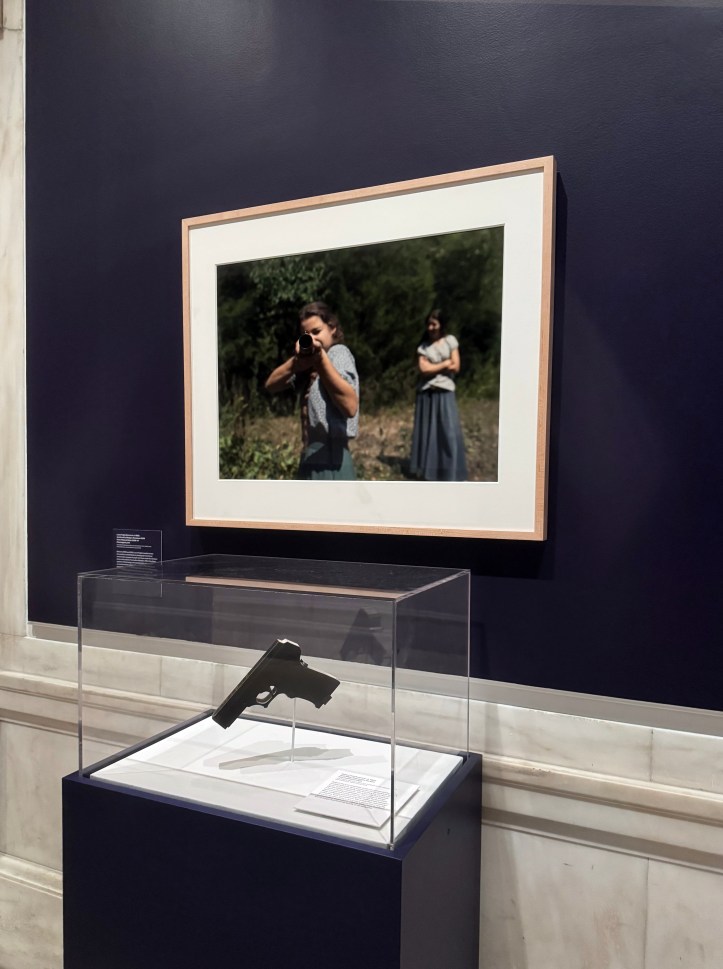
The Art as Declaration section extends this conversation into the present. Through photographs, prints, installations, performances, and multimedia works drawn from the Library’s collections, artists reinterpret the promises of 1776 and ask what concepts such as liberty, equality, and citizenship mean today. Art emerges here as a form of public declaration, a tool for questioning, imagining, and participating in the democratic process.
Equally compelling is the dialogue established between Cecilia with a Shotgun, Tennessee (2028) by Lucas Foglia and Robert The’s Holy Bible: King James Version (Self-published, 1995). Through different artistic approaches, both works explore enduring questions of identity, belief, and American culture.
Elsewhere in the gallery, Vito Acconci’s Wav(er)ing Flag (1990) enters into a particularly sharp conversation with Barbara Kruger’s Untitled (We Will No Longer Be Seen and Not Heard) (1985), positioned at the opposite end of the space. Together, these works transform the gallery into a field of competing declarations, reminding viewers that the meaning of America has never been fixed, but continuously negotiated through images, language, symbols, and acts of public expression.
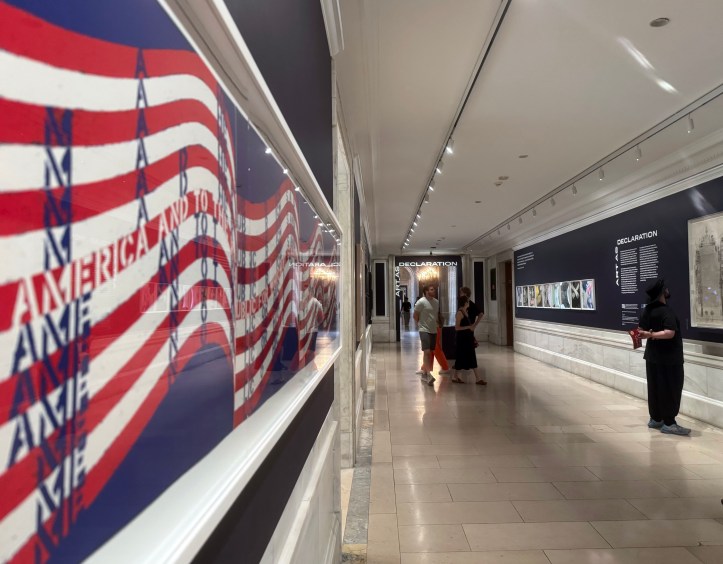
This exhibition is filled with battles, fires, journeys, defeats, and victories. It is filled with ideals fulfilled and promises still awaiting realization. It reminds us who we are and, perhaps more importantly, how we arrived here.
At a time when historical events are often stripped of context and when it can sometimes seem easier to erase what makes us uncomfortable than to understand it, Declaring America: 1776 and Beyond offers something different: an opportunity to face the complexity of our history directly. To recognize ourselves as we are. To celebrate our achievements without ignoring our mistakes.
For that reason, this is, at its core, a profoundly unifying exhibition. Not because it erases differences, but because it reminds us that American history has always been an open conversation among many voices, ideas, and aspirations.
By the end of the exhibition, one lesson becomes unmistakably clear: American democracy is not a document signed in 1776. It is a conversation that continues every day. And few institutions have done more to preserve that conversation than The New York Public Library.
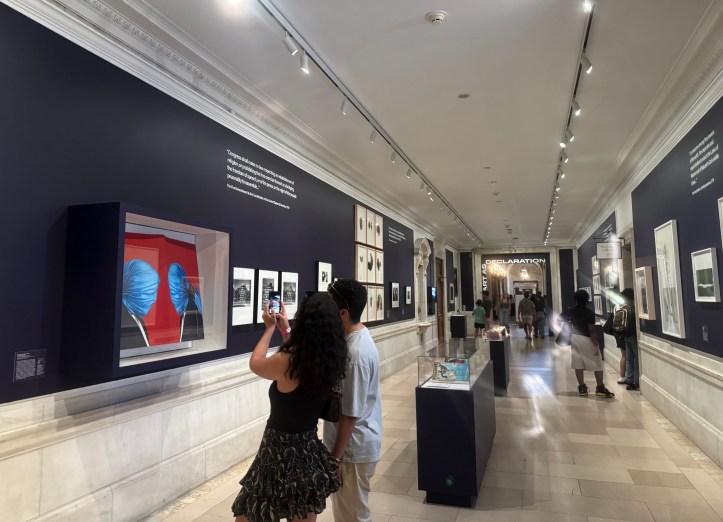
Declaring America: 1776 and Beyond is on view at The New York Public Library’s Stephen A. Schwarzman Building, at Fifth Avenue and 42nd Street, as part of the national commemoration of the 250th anniversary of the United States Declaration of Independence.
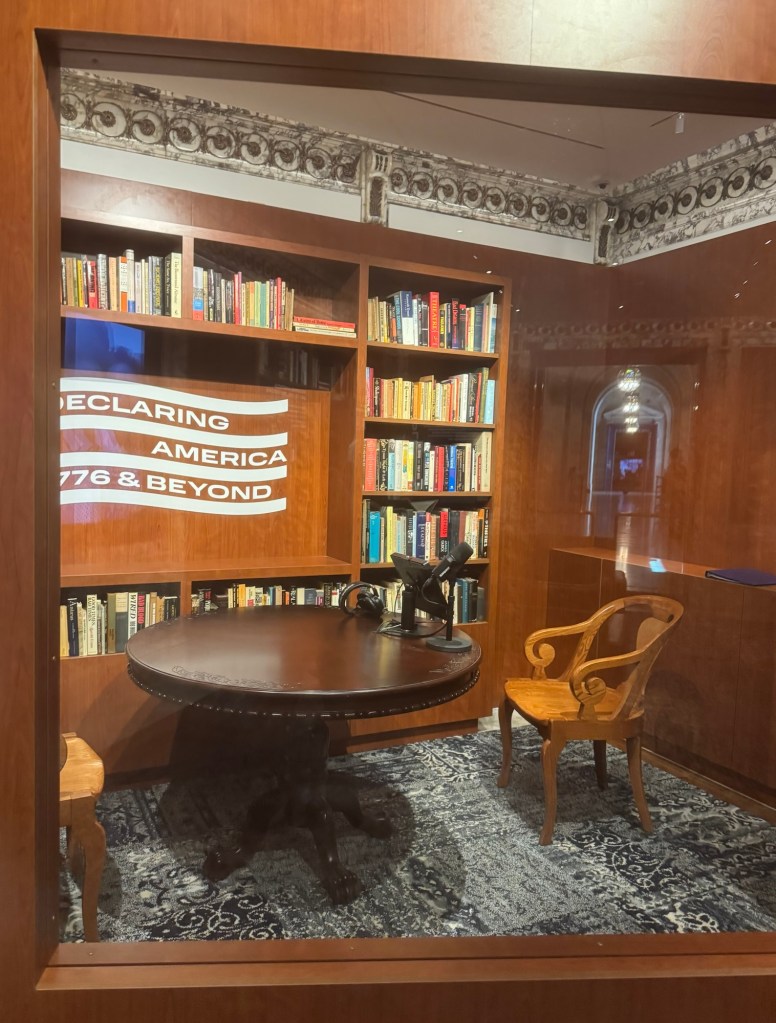
Visitors are also invited to become part of this ongoing national conversation through the Library’s “We the People” Storytelling Project, which encourages the public to share personal stories and reflections as the United States marks its 250th anniversary. In doing so, the Library continues its long tradition of preserving history not only through famous documents and celebrated figures, but also through the voices of ordinary citizens.
As part of the commemoration, The New York Public Library has also released a special-edition library card available at all 92 NYPL locations across the Bronx, Manhattan, and Staten Island. Featuring Thomas Jefferson’s handwritten copy of the Declaration of Independence from the Library’s collections, the card offers visitors the opportunity to take home a small but meaningful piece of this historic anniversary.
Perhaps the greatest achievement of this exhibition is that it does not tell us what to think. Instead, it invites us to look, reflect, disagree, remember, and ultimately participate in the ongoing story of America.
Declaring America: 1776 and Beyond is curated by Jason Baumann, Charles Cuykendall Carter, Clare Bell, Elizabeth C. Denlinger, Ian Fowler, Julie Golia, Tammi Lawson, Whitney Lee, Meredith Mann, Linda Murray, and Maggie Mustard.
Made possible by the generous support of Carnegie Corporation of New York. Support for The New York Public Library’s Exhibitions Program has been provided by Celeste Bartos, Sue and Edgar Wachenheim III, Mahnaz Ispahani Bartos and Adam Bartos Exhibitions Fund, Jonathan Altman, and Miriam and Ira D. Wallach. Additional support is provided by The Edward & Sandra Meyer Foundation and Iron.
Declaring America: 1776 and Beyond will be on view from June 15, 2026, through January 10, 2027, at The New York Public Library’s Stephen A. Schwarzman Building.
Discover more from Art Sôlido
Subscribe to get the latest posts sent to your email.

