
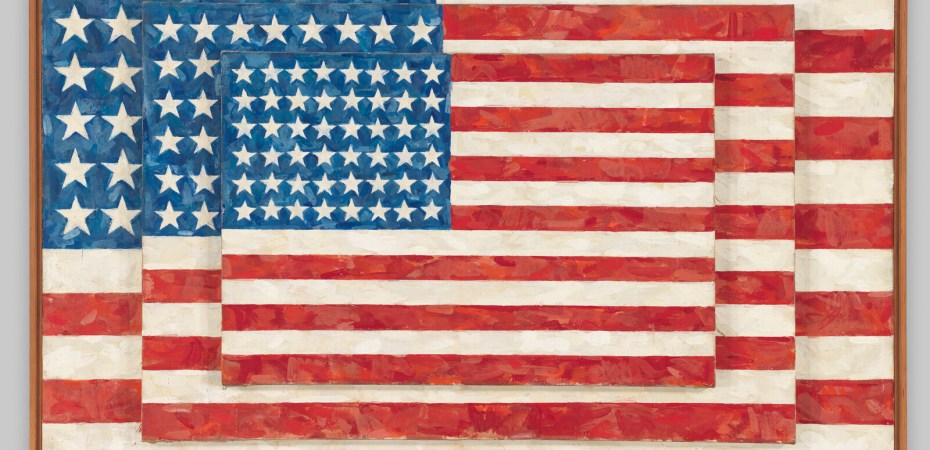
 As the United States marks the 250th anniversary of its birth as a nation, Art-Sólido presents a special selection of twenty-five artists through whom we can trace the evolution of American art across two and a half centuries.
This is not intended as a definitive canon, but as an exclusive Art-Sólido selection created for this historic occasion. The artists gathered here allow us to follow the remarkable transformation of American visual culture: from the formation of a national identity after independence, to the rise of landscape as a distinctly American language, the emergence of modernism, New York’s ascent as an international art capital, and the later expansion of the field toward questions of race, migration, memory, and identity.
Across these 250 years, American art has continually reinvented itself. It has absorbed influences from abroad, transformed them, challenged its own traditions, and opened its history to artists born both within and beyond the nation’s borders. Through these twenty-five figures, we celebrate not only the development of American art, but also the complexity, diversity, and constant transformation of the country itself.
The selection is organized into five fifty-year periods, from 1776 to 2026, offering a concise history through artists whose work changed the way America represented itself, understood itself, and contributed to the broader development of modern and contemporary art.
The number of selected artists increases from one period to the next. This is deliberate. The artistic field of the early republic was relatively small and institutionally limited. By the twentieth and twenty-first centuries, the United States had become one of the world’s major centers of artistic production, attracting artists from across the globe and generating an increasingly diverse range of movements, media, and cultural perspectives.
Each section begins with a broader group of significant artists active during the period, followed by a smaller selection chosen to represent its most consequential artistic and historical transformations.
1776–1825
The First Fifty Years: Art and the Creation of a Republic
A Broader Field
Among the important artists connected to the first decades of the United States were:
John Singleton Copley, Benjamin West, Charles Willson Peale, Gilbert Stuart, John Trumbull, Rembrandt Peale, Raphaelle Peale, Sarah Miriam Peale, Edward Savage, Washington Allston, Samuel F. B. Morse, and Thomas Sully.
The generation surrounding American independence faced a problem that was artistic as much as political: how should a new nation represent itself?
Portraiture and history painting became the dominant answers. Artists created the faces of presidents, revolutionaries, military leaders, intellectuals, and citizens. Painting participated directly in the invention of a national memory.
Many artists of this generation remained deeply dependent on European conventions, particularly British portraiture and academic history painting. Yet their subjects were increasingly American.
Why These Two?
From this larger field, Charles Willson Peale and Gilbert Stuart have been selected because together they represent two essential functions of art in the early republic.
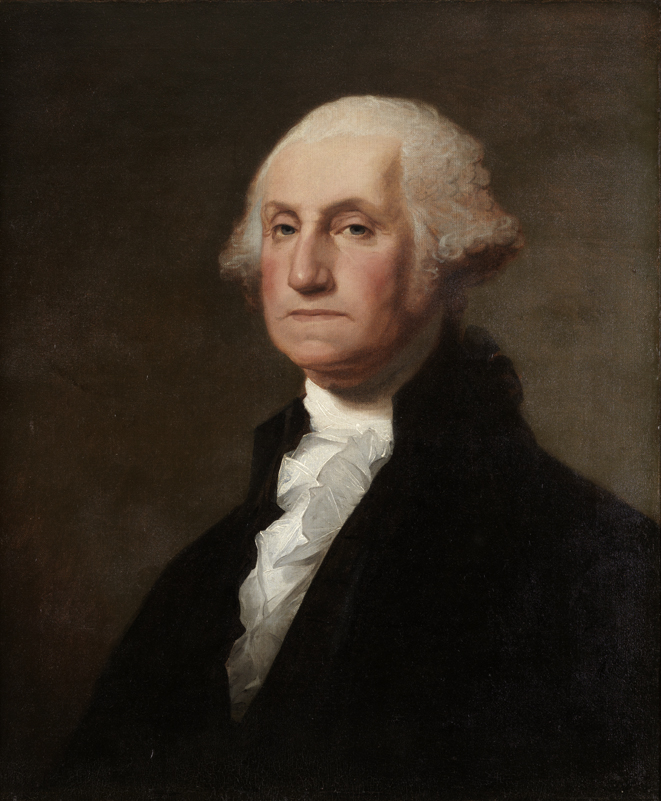
Peale demonstrates how art became connected to citizenship, science, education, collecting, and the creation of cultural institutions. Stuart represents the extraordinary political power of portraiture. His images helped establish the visual identity of the nation’s leaders, particularly George Washington.
Their work shows that before America developed a distinctive modern artistic language, it first needed to create an image of itself.
1. Charles Willson Peale (1741–1827)
Charles Willson Peale was one of the most active artists of the American Revolution and the early decades of the republic. Born in Maryland, he worked as a painter, naturalist, inventor, and cultural organizer. He portrayed many of the leading figures of independence, including George Washington, Thomas Jefferson, and John Adams.
His paintings combine clear realism with careful attention to individual character. Portraiture, for Peale, became a form of public memory. He did not simply record his contemporaries; he helped construct the visual history of the new nation.
His significance extends far beyond painting. In Philadelphia, Peale established a museum combining historical portraits, scientific specimens, and natural history. The project reflected an Enlightenment belief that art, knowledge, science, and public education belonged together.
Peale therefore represents one of the earliest attempts to build not only American art, but an American cultural institution.
2. Gilbert Stuart (1755–1828)
Gilbert Stuart was born in Rhode Island and spent part of his career in Britain before returning to the United States. He became the most celebrated portrait painter of the early republic.
His style combined psychological observation with fluid brushwork and an extraordinary ability to communicate authority and personality. Although Stuart painted many important political and social figures, his portraits of George Washington became among the most recognizable images in American history.
The unfinished Athenaeum Portrait of Washington eventually became the source for the president’s image on the United States one-dollar bill.
Stuart demonstrates how portraiture could become something larger than the representation of an individual. His paintings helped establish a national political iconography that remains recognizable more than two centuries later.
1826–1875
Landscape, Expansion, and the Search for an American Identity
A Broader Field
Important artists of this period include:
Thomas Cole, Asher B. Durand, Frederic Edwin Church, Albert Bierstadt, George Caleb Bingham, George Inness, John Frederick Kensett, Sanford Robinson Gifford, Martin Johnson Heade, Fitz Henry Lane, Eastman Johnson, Emanuel Leutze, Lilly Martin Spencer, Worthington Whittredge, and Winslow Homer.
During these fifty years, the visual imagination of the United States expanded dramatically.
The country was growing geographically and economically, while simultaneously confronting enormous contradictions: westward expansion, the displacement of Native peoples, slavery, immigration, industrialization, the Civil War, and Reconstruction.
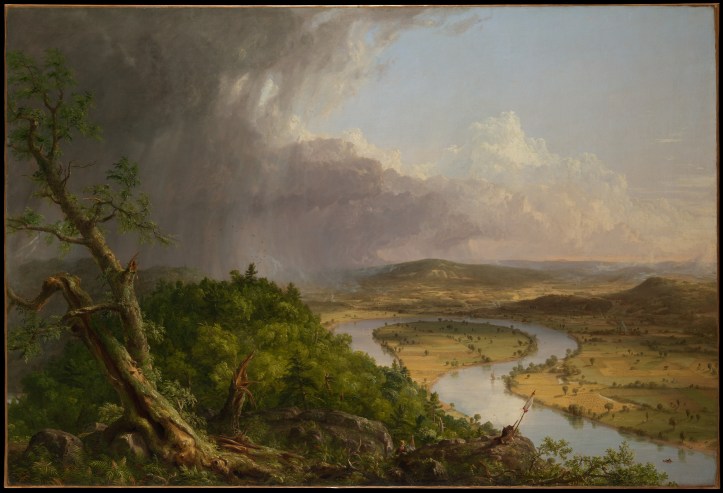
Landscape became one of the defining genres of American painting. The vastness of the continent offered artists a subject that appeared capable of distinguishing American art from European tradition.
The wilderness became beautiful, sublime, spiritual, and political. It could represent divine creation, national destiny, territorial ambition, or an imagined untouched world.
At the same time, genre painting and Civil War imagery introduced ordinary Americans into the visual history of the nation.
Why These Three?
Thomas Cole, Frederic Edwin Church, and Winslow Homer mark three distinct stages in this transformation.
Cole established landscape as a serious intellectual and national form. Church expanded that vision into monumental spectacles of nature and global exploration. Homer brought American art closer to lived experience, war, labor, ordinary people, and the physical struggle between humanity and nature.
Together they trace a movement from the idealized American landscape toward a more psychologically and socially complex American realism.
3. Thomas Cole (1801–1848)
Thomas Cole was born in England and immigrated to the United States in 1818. He became the founder and central figure of what became known as the Hudson River School.
His paintings transformed mountains, rivers, forests, and valleys into subjects of enormous cultural significance. Nature appears not merely as scenery but as sublime territory charged with spiritual, moral, and political meaning.
In series such as The Course of Empire, Cole also examined civilization, ambition, destruction, and historical decline.
Cole was essential because he gave American landscape painting an intellectual ambition comparable to European history painting. He helped establish the land itself as a symbol through which the young nation could imagine its identity.
4. Frederic Edwin Church (1826–1900)
A student of Thomas Cole, Frederic Edwin Church became one of the most celebrated landscape painters of nineteenth-century America.
Church traveled extensively throughout the United States, South America, the Arctic, Europe, and the Middle East. He transformed his observations into enormous compositions filled with volcanoes, waterfalls, mountains, tropical vegetation, icebergs, and luminous skies.
Paintings such as Niagara and The Heart of the Andes were exhibited almost as public spectacles.
Church expanded the Hudson River School beyond a specifically national landscape. His paintings connected American art to exploration, science, geography, tourism, and a growing global consciousness.
5. Winslow Homer (1836–1910)
Winslow Homer began as an illustrator and worked as a visual correspondent during the Civil War. That experience influenced his lifelong interest in ordinary life, labor, conflict, and survival.
His paintings gradually moved away from anecdotal narrative toward increasingly concentrated compositions. Soldiers, children, farmers, fishermen, women, and coastal communities became recurring subjects.
The sea eventually became one of his greatest themes.
Homer is essential because his work represents a shift from the grand idealism of nineteenth-century landscape toward a more direct and psychologically complicated vision of American experience.
1876–1925
Realism, Cosmopolitanism, and the Birth of American Modernism
A Broader Field
The extraordinary range of this period includes:
Thomas Eakins, Mary Cassatt, John Singer Sargent, Henry Ossawa Tanner, James McNeill Whistler, William Merritt Chase, Cecilia Beaux, Childe Hassam, John Twachtman, Robert Henri, George Bellows, John Sloan, George Luks, Maurice Prendergast, Arthur Dove, Marsden Hartley, Charles Demuth, Charles Sheeler, Stuart Davis, Man Ray, Aaron Douglas, Edward Hopper, and Georgia O’Keeffe.
This period is considerably more complicated than the previous two.
American artists were now moving constantly between the United States and Europe. Paris remained enormously influential, but New York, Philadelphia, Chicago, Boston, and other American cities were developing increasingly sophisticated artistic institutions.
Realism, Impressionism, the Ashcan School, Precisionism, early abstraction, photography, and the first forms of a distinctly American modernism emerged alongside one another.
The 1913 Armory Show was particularly important, exposing American audiences to some of the most radical developments in European modern art.
At the same time, questions of race, gender, immigration, industry, urbanization, and modern life became increasingly visible.
Why These Five?
From this exceptionally rich period, Thomas Eakins, Mary Cassatt, John Singer Sargent, Henry Ossawa Tanner, and Georgia O’Keeffe were selected because each represents a different transformation.
Eakins represents uncompromising American realism and the modern study of the body.
Cassatt places an American artist at the center of international Impressionism while radically expanding the representation of women’s experience.
Sargent embodies the increasingly cosmopolitan character of American culture.
Tanner introduces an essential African American presence into a history from which Black artists were systematically excluded.
O’Keeffe brings the narrative toward a distinctly American modernism and abstraction.
Together, they show an American art no longer concerned simply with depicting a nation, but with participating in the international development of modern art.
6. Thomas Eakins (1844–1916)
Thomas Eakins was a central figure in American realism. Educated partly in Europe, he spent most of his career in Philadelphia as painter, teacher, photographer, and student of anatomy.
His paintings are distinguished by rigorous observation and an almost scientific interest in the human body. Doctors, athletes, musicians, rowers, professionals, and members of his immediate circle appear without conventional idealization.
Eakins insisted that art should be grounded in knowledge and direct experience.
His uncompromising approach often brought him into conflict with the institutions of his time, but it ultimately made him one of the most important precursors of modern American realism.
7. Mary Cassatt (1844–1926)
Born in Pennsylvania, Mary Cassatt established herself in France and became the only American artist to exhibit extensively with the French Impressionists.
Her paintings and prints frequently depict women and children, but their importance goes far beyond domestic sentiment.
Cassatt explored looking, touching, reading, education, care, intimacy, and the restricted social environments available to middle- and upper-class women.
Her unusual compositions, cropped viewpoints, flattened spaces, and engagement with Japanese prints made her an important formal innovator.
Cassatt demonstrates that domestic experience could become a serious subject of modern art.
8. John Singer Sargent (1856–1925)
Born in Florence to American parents, John Singer Sargent lived an unusually international life.
He became one of the most sought-after portraitists of his generation, painting aristocrats, intellectuals, artists, financiers, and cultural figures across Europe and America.
His extraordinary technical fluency allowed him to combine psychological presence with social performance.
Sargent represents the increasing cosmopolitanism of American culture at the turn of the century. His career demonstrated that an artist identified with the United States could simultaneously operate at the highest levels of the international art world.
9. Henry Ossawa Tanner (1859–1937)
Henry Ossawa Tanner was born in Pittsburgh and studied at the Pennsylvania Academy of the Fine Arts under Thomas Eakins before eventually settling in France.
He became the first African American painter to achieve sustained international recognition.
His work includes religious scenes, landscapes, interiors, and depictions of African American life. Rather than reproducing the degrading racial stereotypes prevalent in nineteenth-century popular culture, Tanner presented his subjects with dignity and psychological complexity.
His importance is both artistic and historical.
Tanner demonstrated that African American experience belonged within serious painting while confronting an art world shaped by racial exclusion.
10. Georgia O’Keeffe (1887–1986)
Georgia O’Keeffe became one of the defining figures of American modernism.
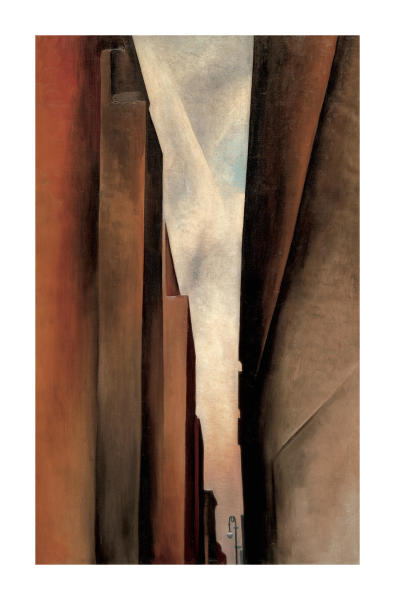
Her enlarged flowers, abstractions, New York skyscrapers, bones, desert forms, and landscapes of New Mexico reduced recognizable subjects to powerful arrangements of color, shape, scale, and rhythm.
O’Keeffe constructed an independent visual language that resisted easy classification.
She is central to this selection because she represents a moment when American modernism no longer needed to appear merely as an extension of European movements.
1926–1975
New York Becomes a World Capital of Art
A Broader Field
The number of major figures now expands dramatically:
Edward Hopper, Georgia O’Keeffe, Stuart Davis, Charles Sheeler, Aaron Douglas, Jacob Lawrence, Alexander Calder, Joseph Cornell, Jackson Pollock, Willem de Kooning, Mark Rothko, Arshile Gorky, Lee Krasner, Barnett Newman, Franz Kline, Robert Motherwell, Clyfford Still, Ad Reinhardt, Helen Frankenthaler, Joan Mitchell, Grace Hartigan, Norman Lewis, David Smith, Louise Nevelson, Isamu Noguchi, Jasper Johns, Robert Rauschenberg, Andy Warhol, Roy Lichtenstein, Claes Oldenburg, James Rosenquist, Donald Judd, Agnes Martin, Dan Flavin, Sol LeWitt, Eva Hesse, Richard Serra, Robert Smithson, and Bruce Nauman.
This is the period in which the scale of American art changes fundamentally.
The political and cultural disruptions of the 1930s and 1940s brought artists, intellectuals, collectors, dealers, and critics from Europe to the United States. After World War II, New York increasingly replaced Paris as the most influential center of Western contemporary art.
The consequences were extraordinary.
Abstract Expressionism, Color Field painting, assemblage, Pop Art, Minimalism, Conceptual Art, performance, earthworks, and new approaches to sculpture emerged in rapid succession.
No selection of seven artists can fully represent this fifty-year period.
Why These Seven?
The seven selected artists represent major turning points rather than every important movement.
Edward Hopper preserves the importance of figurative painting and the psychological experience of modern American life.
Alexander Calder fundamentally changes sculpture by introducing actual movement.
Jacob Lawrence places African American history and migration within the language of modern art.
Jackson Pollock, Willem de Kooning, and Mark Rothko represent different dimensions of the Abstract Expressionist revolution that established New York internationally.
Andy Warhol marks the next great shift, from heroic abstraction toward mass media, consumer culture, celebrity, reproduction, and the collapsing boundary between art and everyday images.
Together, they explain how American art moved from depicting modern life to becoming one of the principal forces defining international modernity.
11. Edward Hopper (1882–1967)
Edward Hopper transformed ordinary American spaces into images of extraordinary psychological intensity.
Restaurants, apartments, gas stations, hotels, theaters, streets, offices, and isolated houses became settings for experiences of waiting, distance, desire, and solitude.
His carefully structured compositions and dramatic use of light made apparently commonplace scenes feel strangely suspended.
Hopper remains essential because few artists have created such a powerful visual psychology of twentieth-century American life.
12. Alexander Calder (1898–1976)
Alexander Calder brought actual movement into modern sculpture.
Originally trained as an engineer, he developed suspended constructions that Marcel Duchamp famously described as “mobiles.”
These works respond to air, gravity, balance, and chance, producing compositions that never remain entirely fixed.
Calder transformed sculpture from a static mass into an event unfolding through space and time.
13. Jacob Lawrence (1917–2000)
Jacob Lawrence developed a distinctive modern narrative language centered on African American history and experience.
His celebrated Migration Series describes the mass movement of African Americans from the rural South to northern cities.
Using simplified forms, strong colors, and sequential panels, Lawrence combined modernist structure with historical storytelling.
He belongs in this group because he expanded both the subject and the social meaning of American modernism.
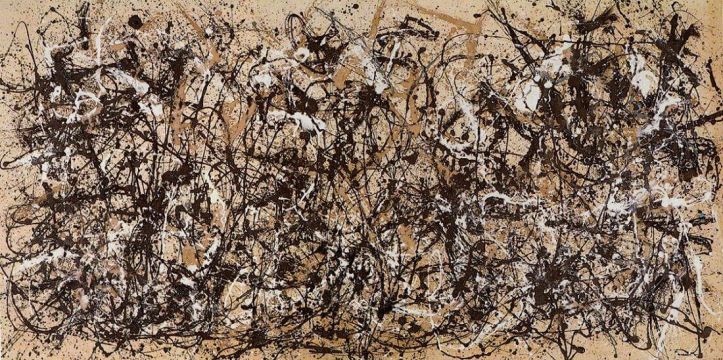
14. Jackson Pollock (1912–1956)
Jackson Pollock became the emblematic figure of Abstract Expressionism.
By pouring, dripping, and throwing paint onto canvases placed on the floor, he transformed painting into an intensely physical process.
The image no longer appeared simply to describe something outside itself. It became the record of movement, time, material, and action.
Pollock’s international impact was crucial to the emergence of New York as the new center of avant-garde art after World War II.
15. Willem de Kooning (1904–1997)
Born in Rotterdam, Willem de Kooning immigrated to the United States in 1926 and became one of the central figures of the New York School.
His work continually moves between abstraction and the human figure.
Dense surfaces, erasures, revisions, aggressive gestures, and unstable images make painting appear as a continuous process rather than a finished statement.
De Kooning is essential precisely because he refused the clean separation between abstraction and representation.
16. Mark Rothko (1903–1970)
Born in what is now Latvia, Mark Rothko immigrated to the United States as a child.
His mature paintings consist primarily of large floating fields of color whose edges seem to dissolve into one another.
Their apparent simplicity masks extraordinary optical and emotional complexity.
Rothko transformed color, scale, and the physical encounter between painting and viewer into the primary content of the artwork.
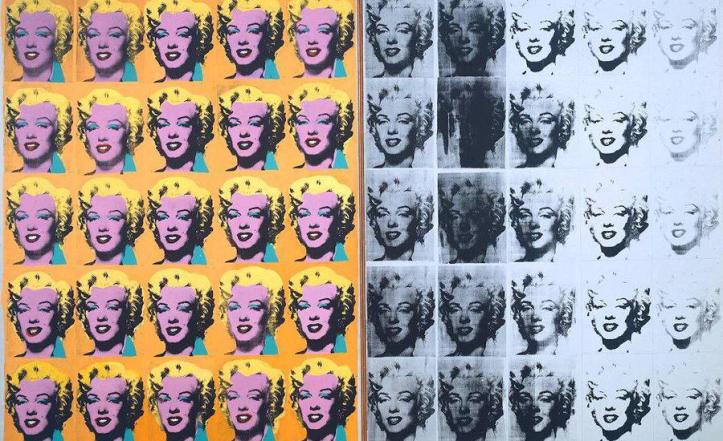
17. Andy Warhol (1928–1987)
Andy Warhol radically changed what could constitute an artistic subject.
Soup cans, Coca-Cola bottles, newspaper photographs, electric chairs, car crashes, Marilyn Monroe, Elvis Presley, and Mao could all become art.
Through repetition and silkscreen reproduction, Warhol collapsed distinctions between fine art, commercial design, celebrity, advertising, and mass media.
His importance reaches far beyond Pop Art. He anticipated a contemporary world dominated by image circulation, branding, celebrity culture, and the unstable relationship between originality and reproduction.
1976–2026
Pluralism, Identity, Memory, and the Contemporary Condition
A Broader Field
The final fifty years produce the broadest and most diverse field:
Jasper Johns, Louise Bourgeois, Philip Guston, Cy Twombly, Richard Serra, Bruce Nauman, David Hammons, Adrian Piper, Faith Ringgold, Betye Saar, Judy Chicago, Ana Mendieta, Cindy Sherman, Barbara Kruger, Jenny Holzer, Sherrie Levine, Richard Prince, Robert Mapplethorpe, Nan Goldin, Jean-Michel Basquiat, Keith Haring, Félix González-Torres, Fred Wilson, Carrie Mae Weems, Lorna Simpson, Glenn Ligon, Kara Walker, Kerry James Marshall, Julie Mehretu, Mark Bradford, Theaster Gates, Sarah Sze, Kehinde Wiley, Amy Sherald, Simone Leigh, Mickalene Thomas, Rashid Johnson, Wangechi Mutu, Njideka Akunyili Crosby, and Firelei Báez, among many others.
By this point, it becomes increasingly difficult to speak of a single dominant movement.
The very idea of an American canon begins to change.
Painting and sculpture remain important, but photography, video, performance, installation, conceptual practices, text, public intervention, and participatory art become equally central.
Artists question not only how art is made but also who has historically been permitted to represent America, whose histories museums preserve, who is absent from collections, and how identity itself is constructed.
Race, gender, sexuality, migration, AIDS, colonialism, memory, mass media, institutional power, and the politics of representation become central artistic subjects.
Why These Eight?
The final eight were selected because they reveal how dramatically the definition of American art expanded after 1976.
Jasper Johns provides a bridge between postwar modernism and the conceptual investigation of signs and symbols.
Louise Bourgeois represents the growing importance of memory, psychology, the body, and autobiographical experience.
Cindy Sherman transforms photography into a critique of identity and representation.
Jean-Michel Basquiat brings race, language, history, and urban culture into the center of contemporary painting.
Ana Mendieta introduces exile, body, landscape, ritual, and displacement through radically interdisciplinary work.
Félix González-Torres transforms Minimalist and Conceptual strategies through intimacy, loss, participation, and political experience.
Kara Walker confronts the violence of American racial history and its visual stereotypes.
Kerry James Marshall returns to the history of painting itself, asking one of the period’s most important questions: who has been allowed to occupy the picture?
These artists were not chosen simply because they belong to different demographic groups. They were selected because each materially altered the language of contemporary art.
18. Jasper Johns (1930– )
Jasper Johns first achieved recognition in the 1950s, but his impact on art after 1976 remained enormous.
Flags, targets, numbers, maps, letters, and familiar objects allowed him to investigate the unstable boundary between an image and the thing it represents.
Is a painted American flag a picture of a flag, an actual flag, a painting, or all three simultaneously?
That deceptively simple question helped open the way toward Conceptual Art, Minimalism, appropriation, and later investigations of signs and language.
19. Louise Bourgeois (1911–2010)
Born in Paris, Louise Bourgeois moved permanently to New York in 1938.
Her long career encompassed sculpture, drawing, printmaking, installation, and textiles.
Bodies, spiders, cages, fragmented figures, architectural spaces, sexuality, family relationships, memory, fear, and trauma recur throughout her work.
Although she had worked for decades, Bourgeois gained extraordinary international recognition later in life.
Her influence became fundamental to artists interested in autobiography, feminism, psychology, installation, and the body.
20. Cindy Sherman (1954– )
Cindy Sherman transformed photographic self-representation into an investigation of identity itself.
In her staged photographs, Sherman becomes actresses, social types, monsters, aristocrats, clowns, historical figures, fashion victims, and invented personalities.
Yet these are not conventional self-portraits.
The photographs ask how identities are constructed through cinema, advertising, fashion, art history, gender expectations, and mass media.
Sherman made the instability of representation itself one of the great subjects of contemporary art.
21. Jean-Michel Basquiat (1960–1988)
Born in Brooklyn to a Haitian father and Puerto Rican mother, Jean-Michel Basquiat emerged from downtown New York culture at the beginning of the 1980s.
His paintings combine anatomy, crowns, words, diagrams, historical references, music, Black cultural figures, colonial history, commodities, and aggressive painterly gestures.
Basquiat confronted systems of race, wealth, fame, exploitation, and cultural authority while simultaneously engaging deeply with the history of painting.
His brief career radically expanded the vocabulary of contemporary American art.
22. Ana Mendieta (1948–1985)
Ana Mendieta was born in Havana and sent to the United States as a child in 1961.
Questions of exile, displacement, belonging, body, landscape, violence, and ritual became central to her work.
In the Silueta Series, Mendieta placed bodily forms or traces into earth, sand, water, vegetation, fire, and other natural environments.
The body becomes simultaneously present and absent.
Her importance lies in collapsing distinctions between sculpture, performance, photography, ritual, landscape, and autobiographical experience.
23. Félix González-Torres (1957–1996)
Born in Cuba, Félix González-Torres eventually made New York the center of his artistic career.
His understated installations employ strings of lights, paired clocks, stacks of printed paper, photographs, billboards, and piles of candy.
Many works can be touched, taken away, depleted, and replenished by viewers.
Through these apparently simple gestures, González-Torres transformed Minimalist and Conceptual vocabularies into meditations on love, mortality, AIDS, politics, absence, and participation.
He made intimacy itself a public and political form.
24. Kara Walker (1969– )
Kara Walker confronts slavery, racism, sexuality, violence, and historical memory through deliberately disturbing images.
Her large black-paper silhouettes initially resemble elegant nineteenth-century decorative forms, but their narratives reveal brutality, domination, desire, and grotesque racial fantasy.
Walker forces viewers to confront how racism survives not only in historical events but also in images, stories, stereotypes, and cultural memory.
Her work has fundamentally altered contemporary approaches to American history.
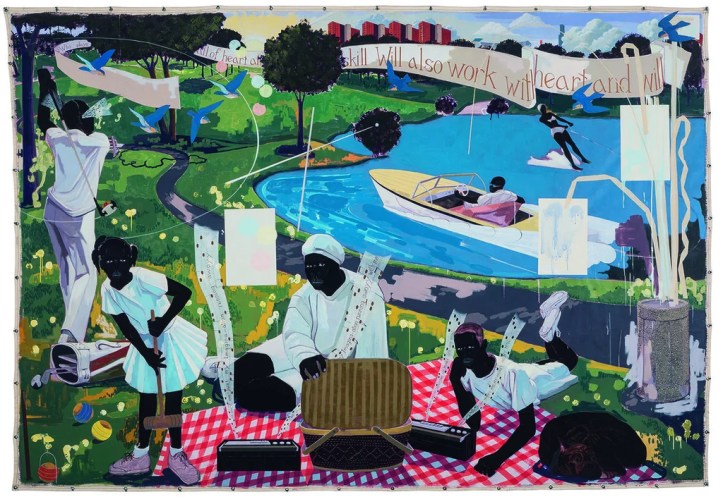
25. Kerry James Marshall (1955– )
Kerry James Marshall has undertaken one of the most ambitious projects in contemporary American painting: placing Black figures firmly within the pictorial traditions from which they were historically excluded.
Portraiture, landscape, domestic interiors, historical painting, abstraction, Renaissance art, modernism, and popular culture all enter his work.
His intensely dark Black figures command the visual field rather than occupying its margins.
Marshall does not reject the history of Western painting. He enters it, studies it, challenges it, and expands it.
His work therefore provides an especially appropriate conclusion to this 250-year history.
A History That Continually Expands
Over 250 years, American art has grown from the visual language of a young republic into one of the most influential and diverse artistic traditions in the world.
From portraiture and landscape to modernism, abstraction, Pop Art, conceptual practices, and contemporary explorations of race, migration, memory, and identity, each generation has expanded the possibilities of what American art could be.
The twenty-five artists selected here are not a complete history, but twenty-five points through which that history can be seen: a history shaped by artists born in the United States and by those who came from elsewhere and made America central to their work.
As the nation celebrates its 250th anniversary, Art-Sólido celebrates this remarkable artistic journey: two and a half centuries of reinvention, contradiction, influence, and transformation.
American art, like America itself, remains unfinished. Its history continues to be written.
Discover more from Art Sôlido
Subscribe to get the latest posts sent to your email.

