
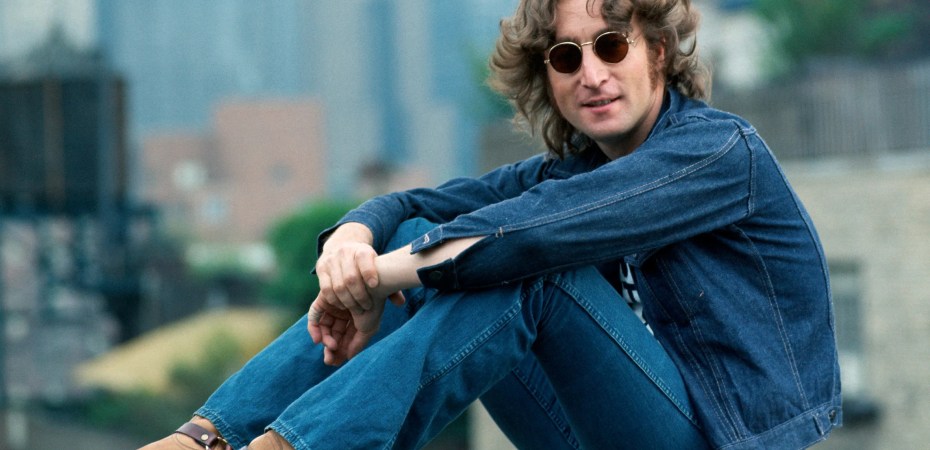
“I was not born in New York. I was born in a place where saying New York could get you in trouble.”
 This is how Henry Ballate’s My Friend John Lennon begins. The sentence seems simple, but it contains almost the entire book: two geographies, two systems of life, and a distance the narrator will spend decades crossing. Between a small Cuban town and Manhattan’s Upper West Side unfolds an autobiography in which John Lennon functions less as a character than as a presence—an invisible interlocutor accompanying the author from childhood to the city where he eventually makes his home.
This is not a book about John Lennon, nor is it a biography of The Beatles. It is the story of a man who constructed an imaginary friendship with someone he never met, a friendship that nevertheless had real consequences in his life. Ballate establishes this almost immediately, when he walks past the Dakota as just another neighborhood resident and confesses: “I was a friend of John Lennon. And long before I arrived in New York, Lennon had already changed my life.” That contradiction—being the friend of someone who never knew you existed—is one of the book’s most compelling ideas.
The true protagonist, however, may be distance. It first takes physical form in an old American radio powered by six large batteries in a rural house without electricity. Stations from the north arrived through interference and static. The boy pressed his ear against the radio as though that small gesture might physically shorten the distance between two worlds. It was there that he first heard The Beatles, without understanding the words, repeatedly opening the back of the radio and searching, almost literally, for the origin of what he was feeling. He examined its insides “as if I might find there the source of that freedom I did not yet know how to name.”
That is perhaps one of the central images of My Friend John Lennon: a child searching for freedom inside a radio.
Music soon becomes more than music. After several personal losses, four adolescents eventually become John, Paul, George, and Ringo among themselves. Lennon’s death, also learned through a radio transmission picked up from the north, takes them one night to the town cemetery. There they pass the graves of their own dead and begin playing Beatles songs. Ballate reduces the scene to one of the book’s starkest images: “It was our first concert. There was no audience; only gravestones.” The four boys then swear that someday they will take the town stage, sing for John, and sing what they were not supposed to sing.
This is where the book finds one of its greatest strengths. Major historical events are rarely narrated from above. They arrive through small objects: a radio, a guitar, a Soviet television set, a Coca-Cola, a chessboard, a prisoner number. History enters the domestic room and alters the lives of the people inside it. Even the Cold War is filtered through the experience of an adolescent learning to control not only what he says, but also what he feels.
The narrative gradually darkens. Youth, art, and music give way to surveillance, imprisonment, and ultimately the decision to leave Cuba by sea. One of the book’s most powerful images appears when Ballate remembers that, while he was imprisoned, radio stations from the north spoke his name every day. The narrator’s response is extraordinary in its economy: “My name traveled more freely than my body.” The entire experience of confinement is contained in that sentence: the man remains imprisoned while his name crosses the strait he still cannot cross.
The sea, therefore, is not merely a geographical border. It becomes the book’s great physical separation. While crossing it on a raft, Ballate discovers that other people were broadcasting the names of those who had left Cuba, trying to determine whether they had survived. The journey that seemed utterly solitary was surrounded by an invisible network of voices, radios, and families waiting for news. The radio of his childhood thus returns transformed: first it had carried Lennon to the boy; years later, it would carry Ballate’s own name outward.
There is also a particularly effective scene precisely because it avoids grandiosity. After arriving in the United States, an immigration officer asks his name. Ballate answers three times: Henry Ballate. He is no longer the boy who called himself Lennon among his friends, nor the number he had been inside a prison cell. “I was Henry Ballate.” In saying his name aloud, he understands that he has just been born again. The identity that for much of the book had existed behind songs, borrowed names, and radio transmissions can finally be spoken aloud.
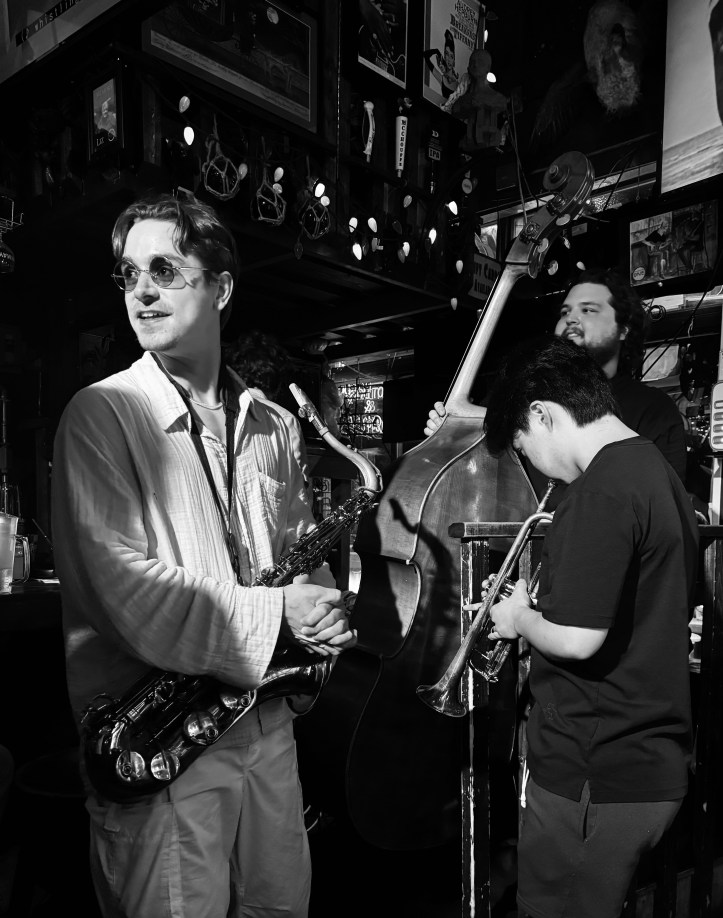
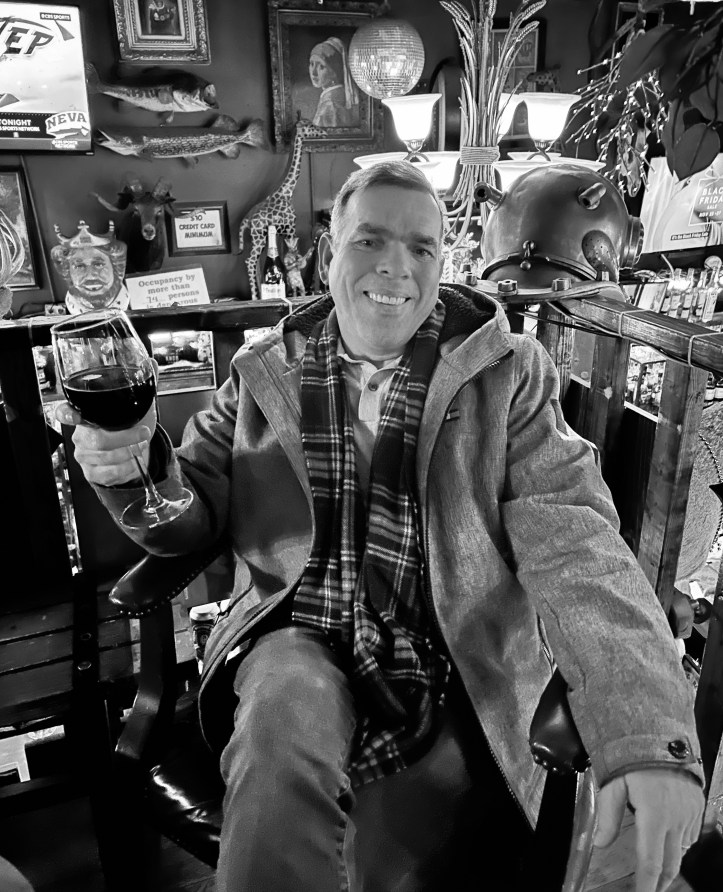
But My Friend John Lennon is not constructed as a strictly chronological autobiography. The New York present continually interrupts the Cuban past. A hockey game watched from an Upper West Side bar opens a door back to 1980; a Lennon song on the jukebox returns the narrator to the news of his murder; the sea reappears even when it cannot be seen from Manhattan. Cuba and New York eventually occupy the narrative simultaneously. They are not simply the before and after of migration; they are two places that continue to exist inside one another.
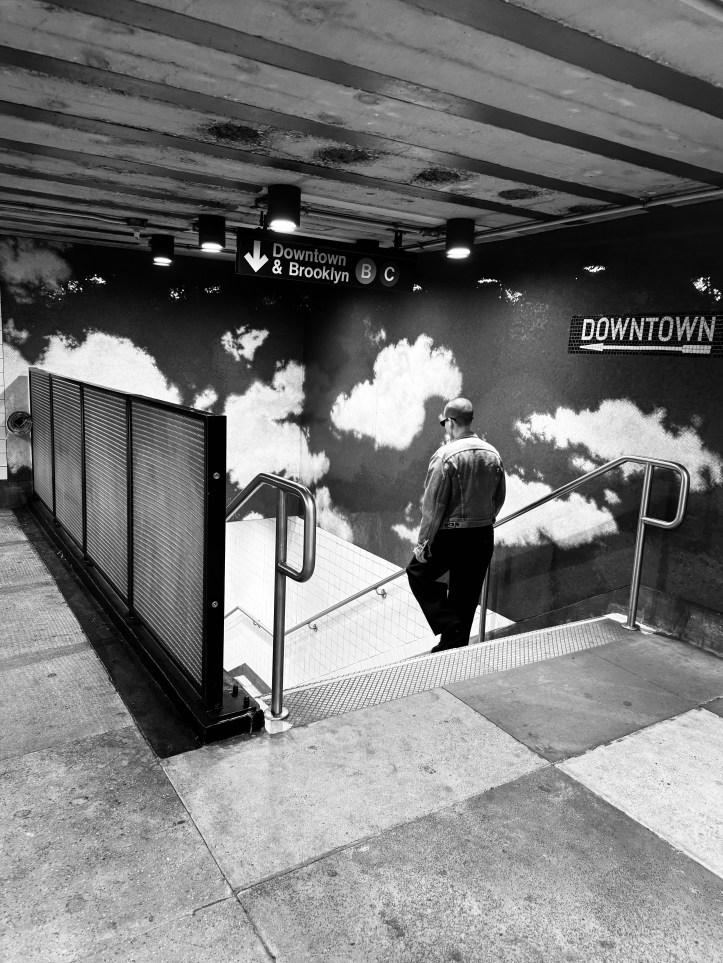
That structure finds its visual equivalent in the black-and-white photographs made by Henry Ballate himself and included in the book, from his series Traces of Silence. They do not function as conventional documentation or as simple illustrations of the places mentioned in the narrative. They are another form of storytelling. Streets, buildings, light, shadow, and isolated figures present a city that seems to exist somewhere between presence and disappearance. Ballate writes the city and, at the same time, photographs it; the camera continues where words reach their limit.
In Traces of Silence, New York is there, breathing beneath its own weight, murmuring through light, steam, and silence. In the photographs, the streets seem inhabited by echoes and architecture acquires the condition of memory. This visual language shares one fundamental concern with the book: what remains after absence. Photography and writing ultimately work on the same territory.
There is something particularly significant in this reversal. As a child, Ballate imagined a city received through radio waves, songs, and images. Now he lives inside that image and produces his own photographs of it. Traces of Silence thus becomes a second memory: not the memory of what was lost, but of what once seemed impossible to reach.
This is why the Dakota acquires such symbolic force. For millions of people, it is the building outside which John Lennon was murdered. For the narrator, it is also part of his everyday route. The doorman recognizes him; he raises his hand slightly and continues walking. That ordinariness is more moving than any pilgrimage. The boy who listened to The Beatles from a house without electricity ends up living only a few streets from the place where the man he had made into a friend died.
One of the greatest achievements of My Friend John Lennon is precisely that it does not attempt to resolve this paradox. Lennon is dead and, at the same time, continues to appear. Cuba was left behind and continues to enter every room. The boy is gone and still looks through the eyes of the adult. New York was first an imagined place and later became reality, but reality cannot completely erase the city that existed in the imagination.
The book begins with an apparently insurmountable distance and ends by questioning what it actually means to arrive. Ballate crosses the countryside, the town, Havana, prison, the sea, and finally the streets of Manhattan, but the most important journey is not geographical. It is the road between the child searching inside a radio for the source of a freedom he could not yet name and the man who can walk past the Dakota, enter a nearby bar, hear a Lennon song, and understand that some friendships do not need to have literally happened in order to have been real within a life.
My Friend John Lennon is, ultimately, a book about art’s strange ability to cross borders before we do. A song crossed first. Then a name. Finally, the man.
And New York was on the other side.
My Friend John Lennon is published in both English and Spanish, under the Spanish title Mi amigo John Lennon, and is available through bookstores and distributors, including Strand Book Store in New York.

Discover more from Art Sôlido
Subscribe to get the latest posts sent to your email.

